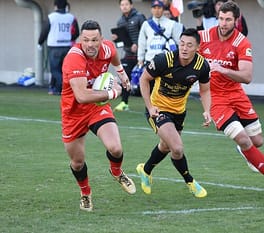
Photo: 江戸村のとくぞう / CC BY-SA 4.0 (source: Wikimedia Commons)
Fraser Anderson was born in Auckland, New Zealand on April 20, 1984. Fraser Anderson is listed as a rugby league player and rugby union player. That works out to 42 years old in 2026. Schooling on record includes Church College of New Zealand.
My Take
Fraser Anderson fascinates me as a true code-hopper, a player who moved between rugby league and rugby union with real conviction. Going from the NRL with Brisbane and Cronulla-Sutherland to finishing his career with the Kobelco Steelers in Japan is a remarkable journey that spans cultures and styles of the game. That Auckland-to-Australia-to-Japan arc tells me he was adaptable, hungry, and unafraid of reinvention. I have a soft spot for athletes who refuse to stay in one lane, and his willingness to chase the game wherever it took him makes him quietly compelling to me.
This take was written by generative AI, one per person, from publicly reported facts (editorial policy). It is a reading of the record, not reporting.
1. Profile
- Name (English)
- Fraser Anderson
- Name (Japanese)
- アンダーソン・フレイザー
- Reading
- あんだーそん・ふれいざー
- Born
- April 20, 1984 (age 42)
- Origin
- Auckland, New Zealand
- Occupation
- rugby league player / rugby union player
- Zodiac / Chinese zodiac
- Taurus / Rat
2. Background
- University
- Church College of New Zealand
3. Links
4. About this entry
Tags
- Last updated
Facts are limited to publicly available information up to 2024; non-public or unconfirmed items are omitted. English text is machine-assisted (facts translated by Sonnet, "My Take" written by Opus 4.8). The Japanese page is the source of record.
Frequently asked questions
When was Fraser Anderson born?
Born April 20, 1984 (age 42).
Where is Fraser Anderson from?
Fraser Anderson is from Auckland, New Zealand.
What does Fraser Anderson do?
Fraser Anderson works as rugby league player, rugby union player.
Rugby league player — see all → · Rugby union player — see all → · More people from New Zealand →