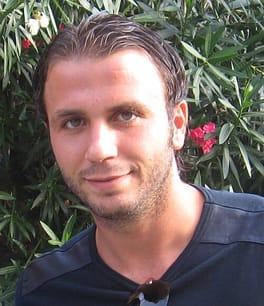
Photo: Beppezena at Italian Wikipedia / Public domain (source: Wikimedia Commons)
Giampaolo Pazzini was born on August 2, 1984 in Pescia, Province of Pistoia, Italy and is credited as an association football player. As of 2026, Giampaolo Pazzini is 42 years old. The listed height is 180 cm.
My Take
Giampaolo Pazzini is the embodiment of the classic Italian penalty-box striker, and his nickname Il Pazzo, "The Madman," tells you he played with edge. Born in Pescia in 1984, he built a long Serie A career across Atalanta, Fiorentina, Sampdoria, both Milan clubs and Hellas Verona, which is practically a tour of Italian football's heartland. What I admire is his durability and instinct for goals at clubs of every size, from title contenders to relegation scrappers. He wasn't the kind of forward who needed beautiful build-up; he thrived on poaching and presence. A throwback No. 9 who got the most out of a long, well-traveled career.
This take was written by generative AI, one per person, from publicly reported facts (editorial policy). It is a reading of the record, not reporting.
1. Profile
- Name (English)
- Giampaolo Pazzini
- Name (Japanese)
- ジャンパオロ・パッツィーニ
- Reading
- じゃんぱおろ・ぱっつぃーに
- Born
- August 2, 1984 (age 42)
- Origin
- Pescia, Province of Pistoia, Italy
- Height
- 180 cm
- Occupation
- association football player
- Zodiac / Chinese zodiac
- Leo / Rat
2. Links
3. About this entry
Tags
- Last updated
Facts are limited to publicly available information up to 2024; non-public or unconfirmed items are omitted. English text is machine-assisted (facts translated by Sonnet, "My Take" written by Opus 4.8). The Japanese page is the source of record.
Frequently asked questions
When was Giampaolo Pazzini born?
Giampaolo Pazzini was born on August 2, 1984 and is 42 years old.
Where is Giampaolo Pazzini from?
Giampaolo Pazzini is from Pescia, Province of Pistoia, Italy.
What does Giampaolo Pazzini do?
Giampaolo Pazzini works as association football player.
How tall is Giampaolo Pazzini?
Giampaolo Pazzini is 180 cm tall.
Association football player — see all → · More people from Italy → · More people born on August 2 →