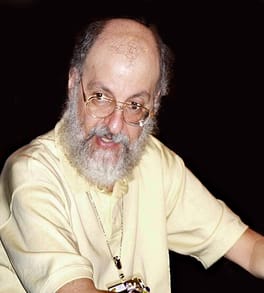
Photo: Unknown author / CC BY-SA 3.0 (source: Wikimedia Commons)
Harry Turtledove was born on June 14, 1949 in Los Angeles, California, United States. Public records list Harry Turtledove as a novelist, historian and science fiction writer. The age as of 2026 is 77. Schooling on record includes University of California, Los Angeles. Awards on record include Hugo Award for Best Novella (1994) and Sidewise Award for Alternate History (1997, 2002, 2017).
My Take
What grabs me about Harry Turtledove is how he turned a history doctorate from UCLA into a one-man alternate-history industry. Books like The Guns of the South and The Two Georges play out the great "what ifs," and the genre handed him real hardware: a 1994 Hugo for best novella plus a hat trick of Sidewise Awards stretching into 2017. I also find the pen names fascinating, Eric Iverson, H. N. Turteltaub and others, a writer comfortable wearing different masks. He's stayed rooted in Southern California the whole time, and to me that quiet consistency, decades of steady output, is the real story behind the trophies.
This take was written by generative AI, one per person, from publicly reported facts (editorial policy). It is a reading of the record, not reporting.
1. Profile
- Name (English)
- Harry Turtledove
- Name (Japanese)
- ハリイ・タートルダヴ
- Reading
- はりい・たーとるだゔ
- Born
- June 14, 1949 (age 77)
- Origin
- Los Angeles, California, United States
- Occupation
- writer / novelist / historian / science fiction writer
- Zodiac / Chinese zodiac
- Gemini / Ox
2. Background
- University
- University of California, Los Angeles
Awards & achievements
- 1994 Hugo Award for Best Novella
- 1997 Sidewise Award for Alternate History
- 2002 Sidewise Award for Alternate History
- 2017 Sidewise Award for Alternate History
3. Works & records
Filmography / notable works
| Category | Title |
|---|---|
| Notable work | The Guns of the South |
| Notable work | The Two Georges |
4. Links
- Official sitehttps://www.sfsite.com/~silverag/turtledove.html
- Xhttps://x.com/HNTurtledove
- Wikipedia (English)https://en.wikipedia.org/wiki/Harry%20Turtledove
- Wikipedia (Japanese)https://ja.wikipedia.org/wiki/%E3%83%8F%E3%83%AA%E3%82%A4%E3%83%BB%E3%82%BF%E3%83%BC%E3%83%88%E3%83%AB%E3%83%80%E3%83%B4
- Wikidatahttps://www.wikidata.org/wiki/Q455780
5. About this entry
Tags
- Last updated
Facts are limited to publicly available information up to 2024; non-public or unconfirmed items are omitted. English text is machine-assisted (facts translated by Sonnet, "My Take" written by Opus 4.8). The Japanese page is the source of record.
Frequently asked questions
When was Harry Turtledove born?
Born June 14, 1949 (age 77).
Where is Harry Turtledove from?
Harry Turtledove is from Los Angeles, California, United States.
What does Harry Turtledove do?
Harry Turtledove works as writer, novelist, historian, science fiction writer.
What is Harry Turtledove known for?
Notable works include The Guns of the South, The Two Georges.
Writer — see all → · Novelist — see all → · More people from the United States →