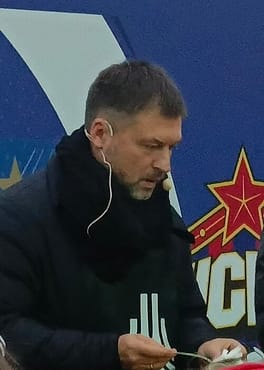
Photo: Quick1984 / CC BY-SA 4.0 (source: Wikimedia Commons)
Igor Korneev, born on September 4, 1967 in Moscow, Moscow Governorate, Duchy of Moscow, is an association football player and association football coach. As of 2026, Igor Korneev is 59 years old. Recorded honors include Merited Coach of Russia. The listed height is 172 cm.
My Take
Igor Korneev interests me because his path defies the era he played in. A Moscow-born midfielder turning out for Espanyol and Barcelona in La Liga meant navigating a foreign language, a different football culture, and the lingering tensions of a post-Soviet world. At 172 cm he clearly survived on intelligence and touch rather than physique, and that's exactly the kind of player I gravitate toward. What seals my respect is his second act: earning the Merited Coach of Russia title shows he wasn't content to fade after retirement. Longevity in football, on the pitch and the touchline, signals a genuinely deep understanding of the game.
This take was written by generative AI, one per person, from publicly reported facts (editorial policy). It is a reading of the record, not reporting.
1. Profile
- Name (English)
- Igor Korneev
- Name (Japanese)
- イーゴリ・コルネーエフ
- Reading
- いーごり・こるねーえふ
- Born
- September 4, 1967 (age 59)
- Origin
- Moscow, Moscow Governorate, Duchy of Moscow
- Height
- 172 cm
- Occupation
- association football player / association football coach / coach
- Zodiac / Chinese zodiac
- Virgo / Goat
2. Background
Awards & achievements
- Merited Coach of Russia
3. Links
4. About this entry
Tags
- Last updated
Facts are limited to publicly available information up to 2024; non-public or unconfirmed items are omitted. English text is machine-assisted (facts translated by Sonnet, "My Take" written by Opus 4.8). The Japanese page is the source of record.
Frequently asked questions
When was Igor Korneev born?
Born September 4, 1967 (age 59).
Where is Igor Korneev from?
Igor Korneev is from Moscow, Moscow Governorate, Duchy of Moscow.
What does Igor Korneev do?
Igor Korneev works as association football player, association football coach, coach.
How tall is Igor Korneev?
Igor Korneev is 172 cm.
Association football player — see all → · Association football coach — see all → · More people from the Duchy of Moscow →