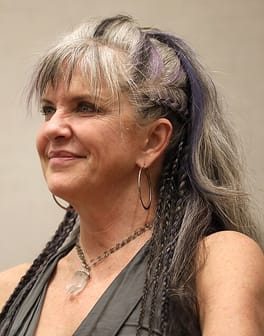
Photo: Gage Skidmore / CC BY-SA 3.0 (source: Wikimedia Commons)
Jennifer Hale is listed as a musician and voice actor. Jennifer Hale was born in Happy Valley-Goose Bay, Newfoundland and Labrador, Canada on January 30, 1972. That works out to 54 years old in 2026. Education on record includes Birmingham–Southern College.
My Take
Jennifer Hale is, to me, one of the unsung architects of modern gaming. If you have played Mass Effect, Metroid Prime, Halo, BioShock Infinite or Knights of the Old Republic, you have heard her work, and her FemShep arguably defined a generation of player attachment to a character. Guinness once named her the most prolific video game voice actor, a record she held until 2024, and that longevity says everything about her range and reliability. What I appreciate is how she brings genuine emotional weight to roles many people never see a face for. Canadian-born and American-based, she is a quiet giant of the medium.
This take was written by generative AI, one per person, from publicly reported facts (editorial policy). It is a reading of the record, not reporting.
1. Profile
- Name (English)
- Jennifer Hale
- Name (Japanese)
- ジェニファー・ヘイル
- Reading
- じぇにふぁー・へいる
- Born
- January 30, 1972 (age 54)
- Origin
- Happy Valley-Goose Bay, Newfoundland and Labrador, Canada
- Occupation
- musician / voice actor
- Zodiac / Chinese zodiac
- Aquarius / Rat
2. Background
- University
- Birmingham–Southern College
3. Links
- Official sitehttps://jenniferhale.com/
- Instagramhttps://www.instagram.com/jhalegram/
- Xhttps://x.com/jhaletweets
- Wikipedia (English)https://en.wikipedia.org/wiki/Jennifer%20Hale
- Wikipedia (Japanese)https://ja.wikipedia.org/wiki/%E3%82%B8%E3%82%A7%E3%83%8B%E3%83%95%E3%82%A1%E3%83%BC%E3%83%BB%E3%83%98%E3%82%A4%E3%83%AB
- Wikidatahttps://www.wikidata.org/wiki/Q195041
4. About this entry
Tags
- Last updated
Facts are limited to publicly available information up to 2024; non-public or unconfirmed items are omitted. English text is machine-assisted (facts translated by Sonnet, "My Take" written by Opus 4.8). The Japanese page is the source of record.
Frequently asked questions
When was Jennifer Hale born?
Born January 30, 1972 (age 54).
Where is Jennifer Hale from?
Jennifer Hale is from Happy Valley-Goose Bay, Newfoundland and Labrador, Canada.
What does Jennifer Hale do?
Jennifer Hale works as musician, voice actor.
Musician — see all → · Voice actor — see all → · More people from Canada →