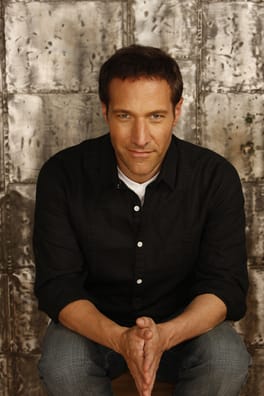
Photo: Clairebrick / CC BY-SA 3.0 (source: Wikimedia Commons)
Jim Brickman is a singer-songwriter, pianist and radio personality, born on November 20, 1961 in Cleveland, Ohio, United States. That puts Jim Brickman at 64 years old in 2026. Schooling on record includes Shaker Heights High School and Case Western Reserve University.
My Take
Jim Brickman's music does something rare: it lowers your shoulders. A Cleveland-born, Case Western-educated pianist with two Grammy nods and a Songwriter of the Year title, he could easily lean on technique to impress. Instead he writes melodies that simply sit beside you, equally at home in a wedding or a quiet kitchen at midnight. His parallel life as a radio host tells me he genuinely understands how people feel, not just how notes resolve. I have a real weakness for artists who master subtraction rather than spectacle, and Brickman is a quiet master of exactly that. He warms a room without ever raising his voice.
This take was written by generative AI, one per person, from publicly reported facts (editorial policy). It is a reading of the record, not reporting.
1. Profile
- Name (English)
- Jim Brickman
- Name (Japanese)
- ジム・ブリックマン
- Reading
- じむ・ぶりっくまん
- Born
- November 20, 1961 (age 64)
- Origin
- Cleveland, Ohio, United States
- Occupation
- singer-songwriter / pianist / radio personality
- Zodiac / Chinese zodiac
- Scorpio / Ox
2. Background
- High school
- Shaker Heights High School
- University
- Case Western Reserve University
3. Links
- Official sitehttps://www.jimbrickman.com
- Instagramhttps://www.instagram.com/therealjimbrickman/
- Xhttps://x.com/jimbrickman
- Wikipedia (English)https://en.wikipedia.org/wiki/Jim%20Brickman
- Wikipedia (Japanese)https://ja.wikipedia.org/wiki/%E3%82%B8%E3%83%A0%E3%83%BB%E3%83%96%E3%83%AA%E3%83%83%E3%82%AF%E3%83%9E%E3%83%B3
- Wikidatahttps://www.wikidata.org/wiki/Q947301
4. About this entry
Tags
- Last updated
Facts are limited to publicly available information up to 2024; non-public or unconfirmed items are omitted. English text is machine-assisted (facts translated by Sonnet, "My Take" written by Opus 4.8). The Japanese page is the source of record.
Frequently asked questions
When was Jim Brickman born?
Born November 20, 1961 (age 64).
Where is Jim Brickman from?
Jim Brickman is from Cleveland, Ohio, United States.
What does Jim Brickman do?
Jim Brickman works as singer-songwriter, pianist, radio personality.
Singer-songwriter — see all → · Pianist — see all → · More people from the United States →