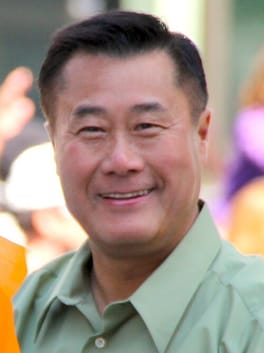
Photo: Tim Bartel / CC BY-SA 2.0 (source: Wikimedia Commons)
Born on November 20, 1948 in Taishan, People's Republic of China, Leland Yee is a politician and child and adolescent psychotherapist. As of 2026, Leland Yee is 77 years old. Education on record includes Mission High School and University of California, Berkeley. Recorded honors include Presidential Medal of Merit.
My Take
Leland Yee is a genuinely thought-provoking figure. Born in Taishan, China, in 1948, he emigrated to the United States, studied at UC Berkeley, worked as a child and adolescent psychotherapist, and rose to the California State Senate representing San Francisco and the Peninsula. I am drawn to the arc from caring for children's minds to public office; it suggests a man originally motivated to help people. His story carries real shadows alongside the light, but the underlying fact of a first-generation immigrant reaching the front line of American politics still carries weight for me. It is a reminder of how complicated, and consequential, public lives can be.
This take was written by generative AI, one per person, from publicly reported facts (editorial policy). It is a reading of the record, not reporting.
1. Profile
- Name (English)
- Leland Yee
- Name (Japanese)
- リーランド・イー
- Reading
- りーらんど・いー
- Born
- November 20, 1948 (age 77)
- Origin
- Taishan, People's Republic of China
- Occupation
- politician / child and adolescent psychotherapist
- Zodiac / Chinese zodiac
- Scorpio / Rat
2. Background
- High school
- Mission High School
- University
- University of California, Berkeley
Awards & achievements
- Presidential Medal of Merit
3. Links
- Wikipedia (English)https://en.wikipedia.org/wiki/Leland%20Yee
- Wikipedia (Japanese)https://ja.wikipedia.org/wiki/%E3%83%AA%E3%83%BC%E3%83%A9%E3%83%B3%E3%83%89%E3%83%BB%E3%82%A4%E3%83%BC
- Wikidatahttps://www.wikidata.org/wiki/Q4820785
4. About this entry
Tags
- Last updated
Facts are limited to publicly available information up to 2024; non-public or unconfirmed items are omitted. English text is machine-assisted (facts translated by Sonnet, "My Take" written by Opus 4.8). The Japanese page is the source of record.
Frequently asked questions
When was Leland Yee born?
Born November 20, 1948 (age 77).
Where is Leland Yee from?
Leland Yee is from Taishan, People's Republic of China.
What does Leland Yee do?
Leland Yee works as politician, child and adolescent psychotherapist.
Politician — see all → · More people from the People's Republic of China →