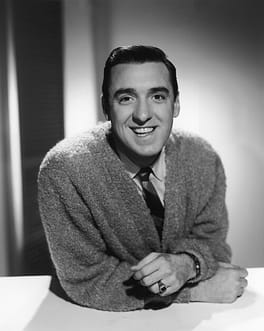
Photo: Hulton Archive/Getty Images / Public domain (source: Wikimedia Commons)
Jim Nabors was a singer, comedian and television actor, born on June 12, 1930 in Sylacauga, Alabama, United States. Jim Nabors died on November 30, 2017, aged 87. Education on record includes University of Alabama. Recorded honors include Golden Raspberry Award for Worst Supporting Actor - Razzie Award (1984).
My Take
Jim Nabors is one of those careers I find quietly moving. Discovered in a Santa Monica nightclub by Andy Griffith, he turned the guileless Gomer Pyle into an American icon, then floored everyone by opening his mouth and revealing a magnificent singing voice. That gap between bumbling comic persona and rich baritone is the heart of his charm. Even a Razzie feels like proof of how beloved he stayed. An Alabama boy with two gifts, comedy and song, he left us in 2017, and I respect him as a genuine, warm-hearted entertainer.
This take was written by generative AI, one per person, from publicly reported facts (editorial policy). It is a reading of the record, not reporting.
1. Profile
- Name (English)
- Jim Nabors
- Name (Japanese)
- ジム・ネイバース
- Reading
- じむ・ねいばーす
- Born
- June 12, 1930 – November 30, 2017
- Origin
- Sylacauga, Alabama, United States
- Occupation
- actor / singer / comedian / television actor / recording artist
- Zodiac / Chinese zodiac
- Gemini / Horse
2. Background
- University
- University of Alabama
Awards & achievements
- 1984 Golden Raspberry Award for Worst Supporting Actor - Razzie Award
3. Links
- Official sitehttps://www.jimnabors.com
- Wikipedia (English)https://en.wikipedia.org/wiki/Jim%20Nabors
- Wikipedia (Japanese)https://ja.wikipedia.org/wiki/%E3%82%B8%E3%83%A0%E3%83%BB%E3%83%8D%E3%82%A4%E3%83%90%E3%83%BC%E3%82%B9
- Wikidatahttps://www.wikidata.org/wiki/Q963787
4. About this entry
Tags
- Last updated
Facts are limited to publicly available information up to 2024; non-public or unconfirmed items are omitted. English text is machine-assisted (facts translated by Sonnet, "My Take" written by Opus 4.8). The Japanese page is the source of record.
Frequently asked questions
When was Jim Nabors born?
Jim Nabors was born on June 12, 1930.
When did Jim Nabors die?
Jim Nabors died on November 30, 2017, aged 87.
Where was Jim Nabors from?
Jim Nabors was from Sylacauga, Alabama, United States.
What did Jim Nabors do?
Jim Nabors worked as actor, singer, comedian, television actor, recording artist.
Where did Jim Nabors study?
Jim Nabors attended University of Alabama.
Actor — see all → · Singer — see all → · More people from the United States → · More people born on June 12 →