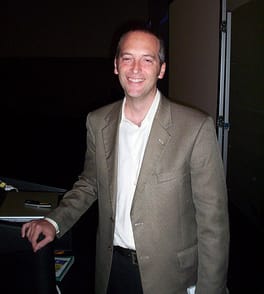
Photo: User:Walkerma / Public domain (source: Wikimedia Commons)
John F. Hartwig is credited as a chemist and university teacher. Born on August 7, 1964, John F. Hartwig is from Elmhurst, Illinois, United States. That works out to 62 years old in 2026. Education on record includes Princeton University. Awards on record include American Chemical Society Award in Organometallic Chemistry (2006), Joseph Chatt Award (2009), Sackler Prize for Chemistry (2007) and 5 more.
My Take
John Hartwig sits in a different category for me entirely. To have a named reaction in organic chemistry, the Buchwald–Hartwig amination, is the kind of immortality most of us can only imagine, because that reaction is still run in labs and pharmaceutical plants every single day. The Wolf Prize, the Mukaiyama Award, and a long list of honours confirm this is substance, not fashion. I am genuinely thrilled to place him in this database. He represents the quiet, cumulative work that nudges human knowledge forward, and that is the kind of accomplishment I respect more than almost any amount of fame.
This take was written by generative AI, one per person, from publicly reported facts (editorial policy). It is a reading of the record, not reporting.
1. Profile
- Name (English)
- John F. Hartwig
- Name (Japanese)
- ジョン・ハートウィグ
- Reading
- じょん・はーとうぃぐ
- Born
- August 7, 1964 (age 62)
- Origin
- Elmhurst, Illinois, United States
- Occupation
- chemist / university teacher
- Zodiac / Chinese zodiac
- Leo / Dragon
2. Background
- University
- Princeton University
Awards & achievements
- 2006 American Chemical Society Award in Organometallic Chemistry
- 2009 Joseph Chatt Award
- 2007 Sackler Prize for Chemistry
- 2019 Wolf Prize in Chemistry
- 2015 Willard Gibbs Award
- 2018 Tetrahedron Prize
- 2008 Mukaiyama Award
- 2018 Centenary Prize
3. Works & records
Filmography / notable works
| Category | Title |
|---|---|
| Notable work | Buchwald–Hartwig amination |
4. Links
5. About this entry
Tags
- Last updated
Facts are limited to publicly available information up to 2024; non-public or unconfirmed items are omitted. English text is machine-assisted (facts translated by Sonnet, "My Take" written by Opus 4.8). The Japanese page is the source of record.
Frequently asked questions
When was John F. Hartwig born?
Born August 7, 1964 (age 62).
Where is John F. Hartwig from?
John F. Hartwig is from Elmhurst, Illinois, United States.
What does John F. Hartwig do?
John F. Hartwig works as chemist, university teacher.
What is John F. Hartwig known for?
Notable works include Buchwald–Hartwig amination.
Chemist — see all → · University teacher — see all → · More people from the United States →