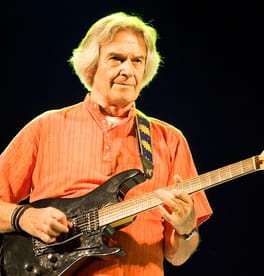
Photo: Буньков Денис / CC BY-SA 4.0 (source: Wikimedia Commons)
John McLaughlin is credited as a guitarist, jazz musician and songwriter. John McLaughlin was born on January 4, 1942 in Doncaster, United Kingdom. The age as of 2026 is 84. Recorded honors include Frankfurter Musikpreis (2012).
My Take
John McLaughlin is one of those guitarists who makes you question what the instrument is even capable of. Born in Doncaster in 1942, he came up through the British blues scene before landing in New York and essentially helping to invent jazz fusion — his work with Miles Davis on Bitches Brew and In a Silent Way alone would cement his legacy, but then he went and formed the Mahavishnu Orchestra and blew everything wide open with double-neck guitars and time signatures that would make most musicians sweat. What I find genuinely remarkable is how he never stopped moving: Indian classical music with Shakti, acoustic duos, flamenco-tinged projects — the curiosity never dried up. The 2012 Frankfurter Musikpreis feels almost understated for someone who reshaped what jazz and rock could do to each other.
This take was written by generative AI, one per person, from publicly reported facts (editorial policy). It is a reading of the record, not reporting.
1. Profile
- Name (English)
- John McLaughlin
- Name (Japanese)
- ジョン・マクラフリン
- Reading
- じょん・まくらふりん
- Born
- January 4, 1942 (age 84)
- Origin
- Doncaster, United Kingdom
- Occupation
- guitarist / jazz musician / songwriter / recording artist / composer
- Zodiac / Chinese zodiac
- Capricorn / Horse
2. Background
Awards & achievements
- 2012 Frankfurter Musikpreis
3. Links
- Official sitehttps://www.johnmclaughlin.com
- Xhttps://x.com/jmcl_gtr
- Wikipedia (English)https://en.wikipedia.org/wiki/John%20McLaughlin%20(musician)
- Wikipedia (Japanese)https://ja.wikipedia.org/wiki/%E3%82%B8%E3%83%A7%E3%83%B3%E3%83%BB%E3%83%9E%E3%82%AF%E3%83%A9%E3%83%95%E3%83%AA%E3%83%B3
- Wikidatahttps://www.wikidata.org/wiki/Q164757
4. About this entry
Tags
- Last updated
Only publicly available facts are listed; non-public or unconfirmed items are omitted. Base data was compiled from Wikidata from June 2026 onward; ages are recalculated daily and deaths are checked against Wikidata on an ongoing basis. English text is machine-assisted (facts translated by Sonnet, "My Take" written by Opus 4.8). The Japanese page is the source of record.
Frequently asked questions
When was John McLaughlin born?
John McLaughlin was born on January 4, 1942 and is 84 years old.
Where is John McLaughlin from?
John McLaughlin is from Doncaster, United Kingdom.
What does John McLaughlin do?
John McLaughlin works as guitarist, jazz musician, songwriter, recording artist, composer.
Guitarist — see all → · Jazz musician — see all → · More people from the United Kingdom → · More people born on January 4 →