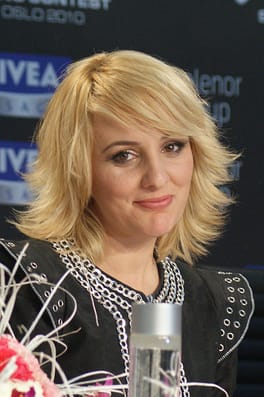
Photo: Daniel Kruczynski / CC BY-SA 2.0 (source: Wikimedia Commons)
Juliana Pasha is credited as a singer. Juliana Pasha was born in Tirana, Tirana County, Albania on May 20, 1980. The age as of 2026 is 46.
My Take
What grabs me about Juliana Pasha is not just that she sang for Albania at Eurovision 2010, but the whole arc of it. Carrying a small Balkan nation onto Europe's biggest pop stage takes a particular kind of nerve, and the honorary citizenship from Burrel suggests her country genuinely felt represented. I find it telling that she later sat as a mentor and judge on The X Factor; performers who can pivot to nurturing talent usually have a generosity that outlasts their chart peak. To me she reads as a national figure first and a pop star second, and that local pride is exactly the thing I respect most.
This take was written by generative AI, one per person, from publicly reported facts (editorial policy). It is a reading of the record, not reporting.
1. Profile
- Name (English)
- Juliana Pasha
- Name (Japanese)
- ユリアナ・パシャ
- Reading
- ゆりあな・ぱしゃ
- Born
- May 20, 1980 (age 46)
- Origin
- Tirana, Tirana County, Albania
- Occupation
- singer
- Zodiac / Chinese zodiac
- Taurus / Monkey
2. Links
- Wikipedia (English)https://en.wikipedia.org/wiki/Juliana%20Pasha
- Wikipedia (Japanese)https://ja.wikipedia.org/wiki/%E3%83%A6%E3%83%AA%E3%82%A2%E3%83%8A%E3%83%BB%E3%83%91%E3%82%B7%E3%83%A3
- Wikidatahttps://www.wikidata.org/wiki/Q229800
3. About this entry
Tags
- Last updated
Facts are limited to publicly available information up to 2024; non-public or unconfirmed items are omitted. English text is machine-assisted (facts translated by Sonnet, "My Take" written by Opus 4.8). The Japanese page is the source of record.
Frequently asked questions
When was Juliana Pasha born?
Born May 20, 1980 (age 46).
Where is Juliana Pasha from?
Juliana Pasha is from Tirana, Tirana County, Albania.
What does Juliana Pasha do?
Juliana Pasha works as singer.