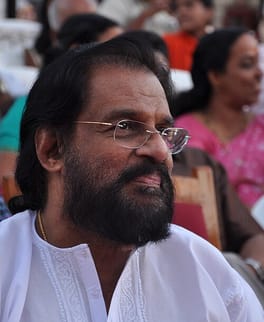
Photo: Rakesh Konni - രാകേഷ് കോന്നി / CC BY-SA 2.0 (source: Wikimedia Commons)
Born on January 10, 1940, K. J. Yesudas is from Fort Kochi, Ernakulam district, India. K. J. Yesudas is listed as a playback singer, recording artist and composer. That works out to 86 years old in 2026. Schooling on record includes St John De Britto Anglo-Indian High School and Swathi Thirunal College of Music. Recorded honors include Sangeet Natak Akademi Award, Padma Bhushan, National Film Award for Best Male Playback Singer and 3 more.
My Take
K. J. Yesudas is, simply put, a living legend, and writing about him feels like a privilege. From Fort Kochi in Kerala, he became one of the greatest voices in Indian music, equally at home in classical, devotional, and film songs as a playback singer. The honors speak for themselves: Padma Bhushan, the 2017 Padma Vibhushan, a National Film Award, the J. C. Daniel Award. Born in 1940 and still revered as Kerala's defining cultural icon, he embodies the idea that a great voice can outlast eras. I hold deep admiration for an artist whose devotion to song spans a lifetime.
This take was written by generative AI, one per person, from publicly reported facts (editorial policy). It is a reading of the record, not reporting.
1. Profile
- Name (English)
- K. J. Yesudas
- Name (Japanese)
- K・J・イェスダス
- Reading
- K・J・いぇすだす
- Born
- January 10, 1940 (age 86)
- Origin
- Fort Kochi, Ernakulam district, India
- Occupation
- playback singer / recording artist / composer / singer
- Zodiac / Chinese zodiac
- Capricorn / Dragon
2. Background
- High school
- St John De Britto Anglo-Indian High School
- University
- Swathi Thirunal College of Music
Awards & achievements
- Sangeet Natak Akademi Award
- Padma Bhushan
- National Film Award for Best Male Playback Singer
- Padma Shri in arts
- 2017 Padma Vibhushan
- 2002 J. C. Daniel Award
3. Links
4. About this entry
Tags
- Last updated
Facts are limited to publicly available information up to 2024; non-public or unconfirmed items are omitted. English text is machine-assisted (facts translated by Sonnet, "My Take" written by Opus 4.8). The Japanese page is the source of record.
Frequently asked questions
When was K. J. Yesudas born?
Born January 10, 1940 (age 86).
Where is K. J. Yesudas from?
K. J. Yesudas is from Fort Kochi, Ernakulam district, India.
What does K. J. Yesudas do?
K. J. Yesudas works as playback singer, recording artist, composer, singer.
Playback singer — see all → · Recording artist — see all → · More people from India →