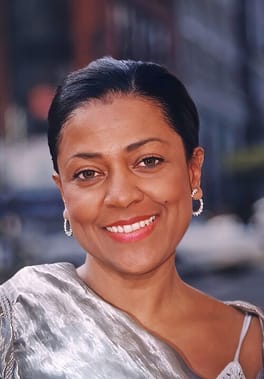
Photo: Kingkongphoto & www.celebrity-photos.com from Laurel Maryland, USA / CC BY-SA 2.0 (source: Wikimedia Commons)
Born on August 13, 1948 in Portsmouth, Ohio, United States, Kathleen Battle is a musician, opera singer and recording artist. That puts Kathleen Battle at 78 years old in 2026. Education on record includes Portsmouth High School and University of Cincinnati. Recorded honors include Laurence Olivier Awards and Candace Award (1992).
My Take
Kathleen Battle is one of those rare sopranos who makes you forget you're listening to opera — that voice is so pure and effortlessly luminous it almost doesn't seem fair. Growing up in Portsmouth, Ohio, and training at the University of Cincinnati, she climbed to the very top of the Metropolitan Opera and became a fixture alongside conductors like James Levine through the '80s and into the '90s. Her lyric coloratura is genuinely in a class of its own — light, crystalline, with an almost supernatural control of dynamics. Yes, her 1994 dismissal from the Met made headlines and became one of classical music's most talked-about controversies, but honestly, the voice speaks louder than any backstage drama. Her recordings of Mozart arias and spirituals remain benchmarks. A complicated legacy, maybe, but an undeniably extraordinary talent.
This take was written by generative AI, one per person, from publicly reported facts (editorial policy). It is a reading of the record, not reporting.
1. Profile
- Name (English)
- Kathleen Battle
- Name (Japanese)
- キャスリーン・バトル
- Reading
- きゃすりーん・ばとる
- Born
- August 13, 1948 (age 78)
- Origin
- Portsmouth, Ohio, United States
- Occupation
- musician / opera singer / recording artist / singer
- Zodiac / Chinese zodiac
- Leo / Rat
2. Background
- High school
- Portsmouth High School
- University
- University of Cincinnati
Awards & achievements
- Laurence Olivier Awards
- 1992 Candace Award
3. Links
- Official sitehttps://www.kathleenbattle.com
- Wikipedia (English)https://en.wikipedia.org/wiki/Kathleen%20Battle
- Wikipedia (Japanese)https://ja.wikipedia.org/wiki/%E3%82%AD%E3%83%A3%E3%82%B9%E3%83%AA%E3%83%BC%E3%83%B3%E3%83%BB%E3%83%90%E3%83%88%E3%83%AB
- Wikidatahttps://www.wikidata.org/wiki/Q241263
4. About this entry
Tags
- Last updated
Only publicly available facts are listed; non-public or unconfirmed items are omitted. Base data was compiled from Wikidata from June 2026 onward; ages are recalculated daily and deaths are checked against Wikidata on an ongoing basis. English text is machine-assisted (facts translated by Sonnet, "My Take" written by Opus 4.8). The Japanese page is the source of record.
Frequently asked questions
When was Kathleen Battle born?
Kathleen Battle was born on August 13, 1948 and is 78 years old.
Where is Kathleen Battle from?
Kathleen Battle is from Portsmouth, Ohio, United States.
What does Kathleen Battle do?
Kathleen Battle works as musician, opera singer, recording artist, singer.
Where did Kathleen Battle study?
Kathleen Battle attended University of Cincinnati.
Musician — see all → · Opera singer — see all → · More people from the United States → · More people born on August 13 →