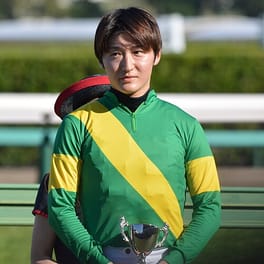
Photo: Nadaraikon / CC BY-SA 3.0 (source: Wikimedia Commons)
My Take
Honestly, every time I think about what jockeys actually do for a living, I feel a little embarrassed about my own complaints. Katsuma Sameshima — born in 1996, still in his twenties — straps himself onto a half-ton animal and charges at sixty-plus kilometers per hour while keeping his own body whittled down to a weight most people would consider a bad week of dieting. That's the deal jockeys make: starve a little, be fearless a lot, and sync your entire nervous system with a creature that doesn't speak your language. We don't have a ton of public detail on Katsuma's biography, but the gig itself says enough. Every race is a negotiation between rider and horse happening in fractions of a second, and the fact that he's out there doing it regularly puts him in a category of quiet toughness I genuinely respect. I'm rooting for this guy.
This take was written by generative AI, one per person, from publicly reported facts (editorial policy). It is a reading of the record, not reporting.
Overview
Katsuma Sameshima is a Japanese professional jockey born on October 18, 1996. He competes in thoroughbred horse racing in Japan and maintains an Instagram presence under his own name. Further biographical details, including his home prefecture and career debut year, are not publicly disclosed.
1. Profile
- Name (English)
- Katsuma Sameshima
- Name (Japanese)
- 鮫島克駿
- Reading
- さめしま かつま
- Born
- October 18, 1996 (age 29)
- Origin
- Japan
- Occupation
- Jockey
- Zodiac / Chinese zodiac
- Libra / Rat
2. Links
3. About this entry
Tags
- Last updated
Facts are limited to publicly available information up to 2024; non-public or unconfirmed items are omitted. English text is machine-assisted (facts translated by Sonnet, "My Take" written by Opus 4.8). The Japanese page is the source of record.
Frequently asked questions
When was Katsuma Sameshima born?
Born October 18, 1996 (age 29).
Where is Katsuma Sameshima from?
Katsuma Sameshima is from Japan.
What does Katsuma Sameshima do?
Katsuma Sameshima works as Jockey.