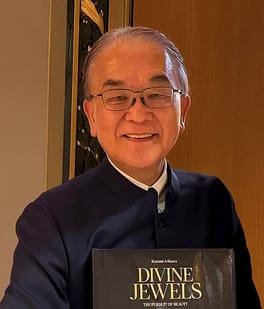
Photo: InfoboxJP / CC BY-SA 4.0 (source: Wikimedia Commons)
My Take
Kazumi Arikawa is a fascinating figure who proves cultural influence need not be loud. As president of the Albion Art Jewellery Institute, he is a researcher and collector who has elevated the scholarship and stewardship of fine jewellery to a global level. What strikes me is the quiet authority of his credentials: a seat on the International Council of New York's Metropolitan Museum of Art and a Chevalier of France's Order of Arts and Letters. Few have devoted themselves so seriously to preserving and presenting jewellery heritage. I deeply admire this kind of understated, world-class connoisseurship working behind the scenes of art history.
This take was written by generative AI, one per person, from publicly reported facts (editorial policy). It is a reading of the record, not reporting.
1. Profile
- Name (English)
- Kazumi Arikawa
- Name (Japanese)
- 有川一三
- Reading
- ありかわ・かずみ
- Born
- 1952
- Occupation
- art collector
- Zodiac / Chinese zodiac
- Dragon
2. Links
- Wikipedia (English)https://en.wikipedia.org/wiki/Kazumi%20Arikawa
- Wikipedia (Japanese)https://ja.wikipedia.org/wiki/%E6%9C%89%E5%B7%9D%E4%B8%80%E4%B8%89
- Wikidatahttps://www.wikidata.org/wiki/Q137133182
3. About this entry
Tags
- Last updated
Facts are limited to publicly available information up to 2024; non-public or unconfirmed items are omitted. English text is machine-assisted (facts translated by Sonnet, "My Take" written by Opus 4.8). The Japanese page is the source of record.