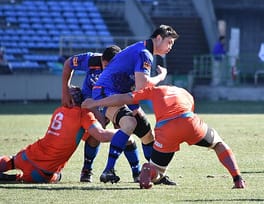
Photo: 江戸村のとくぞう / CC BY-SA 4.0 (source: Wikimedia Commons)
My Take
Kotaro Yatabe is one of those guys where the name alone tells you something — there's a straightforwardness to it, no flash, no frills, just solid syllables that feel like they belong to someone who does the dirty work without making a fuss about it. That's an almost cartoonishly fierce combo, like the universe just decided to go all in. Gunma is wide-sky, windy country, and I've always figured that kind of landscape either toughens you up or blows right through you; clearly it did the former here. I don't have a deep dossier on his career specifics, but the fact that his name is in the record books at all in a sport built on physical punishment and relentless team trust says plenty. Some guys just show up and hit hard, and I respect that more than I can easily explain.
This take was written by generative AI, one per person, from publicly reported facts (editorial policy). It is a reading of the record, not reporting.
Overview
Kotaro Yatabe is a Japanese rugby union player born on July 29, 1986, in Gunma Prefecture, Japan. He attended Kokushikan University, where he pursued the sport. Further details about his professional career and club affiliations are not publicly available.
1. Profile
- Name (English)
- Kotaro Yatabe
- Name (Japanese)
- 谷田部洸太郎
- Reading
- やたべ こうたろう
- Born
- July 29, 1986 (age 40)
- Origin
- Gunma Prefecture, Japan
- Occupation
- Rugby union player
- Zodiac / Chinese zodiac
- Leo / Tiger
2. Background
- University
- Kokushikan University
3. Links
4. About this entry
Tags
- Last updated
Facts are limited to publicly available information up to 2024; non-public or unconfirmed items are omitted. English text is machine-assisted (facts translated by Sonnet, "My Take" written by Opus 4.8). The Japanese page is the source of record.
Frequently asked questions
When was Kotaro Yatabe born?
Born July 29, 1986 (age 40).
Where is Kotaro Yatabe from?
Kotaro Yatabe is from Gunma Prefecture, Japan.
What does Kotaro Yatabe do?
Kotaro Yatabe works as Rugby union player.