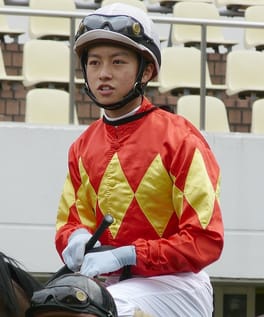
Photo: Cake6 (talk) / CC BY-SA 3.0 (source: Wikimedia Commons)
My Take
A jockey born on Halloween — honestly, that's too on-brand. Jockeys don't get nearly enough credit: you're talking about controlling a 500-kilogram animal at full sprint while reading the race, feeling the field, and making split-second calls that can win or lose everything in under two minutes. It's athletic and mental and almost meditative all at once. Makoto Sugihara strikes me as the type who doesn't need the spotlight — he's the kind of professional who just shows up, puts the work in, and lets the track do the talking. I don't know all the details of his career, but that grind-in-silence energy is something I genuinely respect. Here's hoping he keeps finding his stride out there.
This take was written by generative AI, one per person, from publicly reported facts (editorial policy). It is a reading of the record, not reporting.
Overview
Makoto Sugihara is a Japanese jockey born on October 31, 1992, in Saitama Prefecture. He competes in horse racing and is identified under his real name with no known stage name. Most personal details, including his agency and active period, have not been disclosed publicly.
1. Profile
- Name (English)
- Makoto Sugihara
- Name (Japanese)
- 杉原誠人
- Reading
- すぎはら まこと
- Born
- October 31, 1992 (age 33)
- Origin
- Saitama Prefecture, Japan
- Occupation
- Jockey
- Zodiac / Chinese zodiac
- Scorpio / Monkey
2. Links
- Wikipedia (Japanese)https://ja.wikipedia.org/wiki/%E6%9D%89%E5%8E%9F%E8%AA%A0%E4%BA%BA
- Wikidatahttps://www.wikidata.org/wiki/Q11521788
3. About this entry
Tags
- Last updated
Facts are limited to publicly available information up to 2024; non-public or unconfirmed items are omitted. English text is machine-assisted (facts translated by Sonnet, "My Take" written by Opus 4.8). The Japanese page is the source of record.
Frequently asked questions
When was Makoto Sugihara born?
Born October 31, 1992 (age 33).
Where is Makoto Sugihara from?
Makoto Sugihara is from Saitama Prefecture, Japan.
What does Makoto Sugihara do?
Makoto Sugihara works as Jockey.