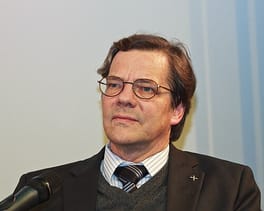
Photo: A.Savin / CC BY-SA 3.0 (source: Wikimedia Commons)
Markus Dröge was born on October 16, 1954 in Washington, D.C., United States and is credited as a pastor, writer and bishop. As of 2026, Markus Dröge is 71 years old. Schooling on record includes University of Tübingen.
My Take
Markus Dröge fascinates me for the geography alone: born in Washington, D.C., yet he became a German theologian and rose to serve as bishop of the Evangelical Church Berlin-Brandenburg from 2009 to 2019. There is something quietly compelling about a life that bridges continents and then anchors itself so deeply in service. As a writer as well as a clergyman, he belongs to the tradition of people who shape communities not through spectacle but through patient, thoughtful work. I admire careers like his, where influence is measured in trust earned over decades rather than in headlines. He is the kind of steady figure history tends to undervalue.
This take was written by generative AI, one per person, from publicly reported facts (editorial policy). It is a reading of the record, not reporting.
1. Profile
- Name (English)
- Markus Dröge
- Name (Japanese)
- マルクス・ドレーゲ
- Reading
- まるくす・どれーげ
- Born
- October 16, 1954 (age 71)
- Origin
- Washington, D.C., United States
- Occupation
- pastor / theologian / writer / bishop / Protestant theologian
- Zodiac / Chinese zodiac
- Libra / Horse
2. Background
- University
- University of Tübingen
3. Links
4. About this entry
Tags
- Last updated
Facts are limited to publicly available information up to 2024; non-public or unconfirmed items are omitted. English text is machine-assisted (facts translated by Sonnet, "My Take" written by Opus 4.8). The Japanese page is the source of record.
Frequently asked questions
When was Markus Dröge born?
Born October 16, 1954 (age 71).
Where is Markus Dröge from?
Markus Dröge is from Washington, D.C., United States.
What does Markus Dröge do?
Markus Dröge works as pastor, theologian, writer, bishop, Protestant theologian.
Pastor — see all → · Theologian — see all → · More people from the United States →