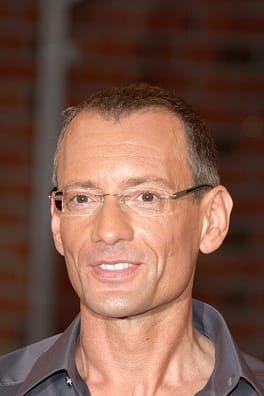
Photo: Udo Grimberg / CC BY-SA 3.0 de (source: Wikimedia Commons)
Mathias Rust was born in Wedel, Schleswig-Holstein, Germany on June 1, 1968. Public records list Mathias Rust as an aircraft pilot, poker player and peace activist. The age as of 2026 is 58.
My Take
Mathias Rust is one of those people whose entire legacy rests on a single afternoon, and honestly, what an afternoon. In May 1987, this 18-year-old West German kid with barely 50 hours of flight experience took a rented Cessna from Helsinki, flew straight through Soviet airspace — past radar stations, interceptor jets, and the entire Cold War apparatus — and touched down near Red Square like he was parking a bicycle. The geopolitical fallout was enormous: Gorbachev used it as cover to sack dozens of senior military commanders who had embarrassed the USSR. Rust served a little over a year in a Soviet prison, then went back to Germany, where his life turned troubled: in 1989 he stabbed a hospital co-worker and was jailed again. But for one surreal moment he pulled off something no NATO general ever could — he made Soviet air defense look like a joke, and he did it with a rental plane and a teenager's nerve.
This take was written by generative AI, one per person, from publicly reported facts (editorial policy). It is a reading of the record, not reporting.
1. Profile
- Name (English)
- Mathias Rust
- Name (Japanese)
- マチアス・ルスト
- Reading
- まちあす・るすと
- Born
- June 1, 1968 (age 58)
- Origin
- Wedel, Schleswig-Holstein, Germany
- Occupation
- aircraft pilot / poker player / peace activist
- Zodiac / Chinese zodiac
- Gemini / Monkey
2. Links
- Wikipedia (English)https://en.wikipedia.org/wiki/Mathias%20Rust
- Wikipedia (Japanese)https://ja.wikipedia.org/wiki/%E3%83%9E%E3%83%81%E3%82%A2%E3%82%B9%E3%83%BB%E3%83%AB%E3%82%B9%E3%83%88
- Wikidatahttps://www.wikidata.org/wiki/Q76657
3. About this entry
Tags
- Last updated
Only publicly available facts are listed; non-public or unconfirmed items are omitted. Base data was compiled from Wikidata from June 2026 onward; ages are recalculated daily and deaths are checked against Wikidata on an ongoing basis. English text is machine-assisted (facts translated by Sonnet, "My Take" written by Opus 4.8). The Japanese page is the source of record.
Frequently asked questions
When was Mathias Rust born?
Mathias Rust was born on June 1, 1968 and is 58 years old.
Where is Mathias Rust from?
Mathias Rust is from Wedel, Schleswig-Holstein, Germany.
What does Mathias Rust do?
Mathias Rust works as aircraft pilot, poker player, peace activist.
Aircraft pilot — see all → · Poker player — see all → · More people from Germany → · More people born on June 1 →