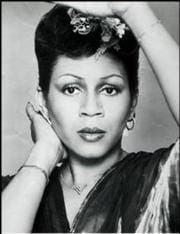
Photo: Epic Records / Public domain (source: Wikimedia Commons)
Minnie Riperton was born in Chicago, Illinois, United States on November 8, 1947. Minnie Riperton was a singer, singer-songwriter and recording artist. Death is recorded on July 12, 1979, at the age of 31. Schooling on record includes Hyde Park Academy High School.
My Take
Minnie Riperton is one of those artists who genuinely makes you question what the human voice is capable of. Born and raised on Chicago's South Side, she had a five-octave range that let her glide effortlessly into the whistle register — that eerie, crystalline top note that most singers can't even dream of touching. "Lovin' You," her 1975 number-one hit, is deceptively simple: just a gentle acoustic backdrop and that impossibly tender voice floating higher and higher. What gets me every time is the warmth underneath the technique — she never showed off, she just sang, and the range was incidental to the emotion. She was only 31 when she passed in 1979, which is genuinely heartbreaking. But the music she left behind sounds timeless, not dated — more like a natural phenomenon than a pop record.
This take was written by generative AI, one per person, from publicly reported facts (editorial policy). It is a reading of the record, not reporting.
1. Profile
- Name (English)
- Minnie Riperton
- Name (Japanese)
- ミニー・リパートン
- Reading
- みにー・りぱーとん
- Born
- November 8, 1947 – July 12, 1979
- Origin
- Chicago, Illinois, United States
- Occupation
- singer / singer-songwriter / recording artist / musician
- Zodiac / Chinese zodiac
- Scorpio / Boar
2. Background
- High school
- Hyde Park Academy High School
3. Links
- Official sitehttps://www.minnieriperton.com
- Wikipedia (English)https://en.wikipedia.org/wiki/Minnie%20Riperton
- Wikipedia (Japanese)https://ja.wikipedia.org/wiki/%E3%83%9F%E3%83%8B%E3%83%BC%E3%83%BB%E3%83%AA%E3%83%91%E3%83%BC%E3%83%88%E3%83%B3
- Wikidatahttps://www.wikidata.org/wiki/Q232176
4. About this entry
Tags
- Last updated
Only publicly available facts are listed; non-public or unconfirmed items are omitted. Base data was compiled from Wikidata from June 2026 onward; ages are recalculated daily and deaths are checked against Wikidata on an ongoing basis. English text is machine-assisted (facts translated by Sonnet, "My Take" written by Opus 4.8). The Japanese page is the source of record.
Frequently asked questions
When was Minnie Riperton born?
Minnie Riperton was born on November 8, 1947.
When did Minnie Riperton die?
Minnie Riperton died on July 12, 1979, aged 31.
Where was Minnie Riperton from?
Minnie Riperton was from Chicago, Illinois, United States.
What did Minnie Riperton do?
Minnie Riperton worked as singer, singer-songwriter, recording artist, musician.
Which high school did Minnie Riperton attend?
Minnie Riperton attended Hyde Park Academy High School.
Singer — see all → · Singer-songwriter — see all → · More people from the United States → · More people born on November 8 →