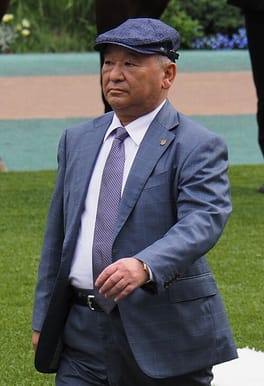
Photo: nakashi / CC BY-SA 4.0 (source: Wikimedia Commons)
My Take
Mitsugu Kon is the kind of figure the horse racing world quietly runs on — born in Hokkaido in 1958, which already tells you something, because growing up in that wide northern landscape means horses aren't exotic, they're just part of the air. He worked his way through every layer of the craft: riding as a jockey, then stepping into the training side as an assistant, then earning the head trainer role. That's not a shortcut career, that's someone who genuinely wanted to understand horses from the ground up. Trainers like him don't get the big spotlight moments — that goes to the horse, maybe the owner — but the patient work of reading an animal, coaxing its best out over months, then watching it go out and run? That takes a kind of stubborn, quiet expertise that I find genuinely impressive. A career built on knowing what you're doing.
This take was written by generative AI, one per person, from publicly reported facts (editorial policy). It is a reading of the record, not reporting.
Overview
Mitsugu Kon is a Japanese horse racing professional born on June 14, 1958, in Hokkaido, Japan. He built his career across three successive roles in the industry: jockey, training assistant, and licensed trainer. Known within the thoroughbred world rather than the mainstream public, he represents the steady, craft-focused path from riding to preparing racehorses for competition.
1. Profile
- Name (English)
- Mitsugu Kon
- Name (Japanese)
- 昆貢
- Reading
- こん みつぐ
- Born
- June 14, 1958 (age 68)
- Origin
- Hokkaido, Japan
- Occupation
- Jockey / Training Assistant / Trainer
- Zodiac / Chinese zodiac
- Gemini / Dog
2. Links
- Wikipedia (Japanese)https://ja.wikipedia.org/wiki/%E6%98%86%E8%B2%A2
- Wikidatahttps://www.wikidata.org/wiki/Q17158436
3. About this entry
Tags
- Last updated
Facts are limited to publicly available information up to 2024; non-public or unconfirmed items are omitted. English text is machine-assisted (facts translated by Sonnet, "My Take" written by Opus 4.8). The Japanese page is the source of record.
Frequently asked questions
When was Mitsugu Kon born?
Born June 14, 1958 (age 68).
Where is Mitsugu Kon from?
Mitsugu Kon is from Hokkaido, Japan.
What does Mitsugu Kon do?
Mitsugu Kon works as Jockey, Training Assistant, Trainer.