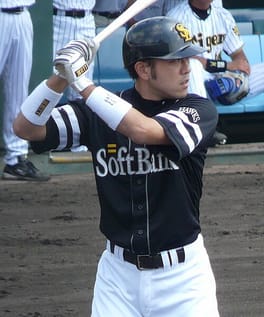
Photo: Cake6 (talk) / CC BY-SA 3.0 (source: Wikimedia Commons)
My Take
Motohiro Yoshikawa is one of those quietly solid figures that Japanese baseball quietly produces from unexpected corners — in his case, Takasaki, Gunma, not exactly a prefecture you'd peg as a baseball hotbed, and yet here he is. Drafted as a pitcher, rebuilt as a slugger on the farm team, he waited eleven seasons for his first top-team home run, a pinch-hit, extra-inning game-tying shot for SoftBank in 2008 — the career of someone who showed up, did the work, and let the game speak for itself rather than chasing headlines. There's something refreshing about that. A big guy from Gunma who put in the reps. Baseball is full of stories like his, and the sport is richer for every one of them.
This take was written by generative AI, one per person, from publicly reported facts (editorial policy). It is a reading of the record, not reporting.
Overview
Motohiro Yoshikawa (born July 29, 1979, in Takasaki, Gunma Prefecture) is a Japanese former professional baseball infielder. Standing 184 cm tall, he joined the Kintetsu Buffaloes as a pitcher in the 1997 draft, converted to hitting in 2000, and later played for the Yomiuri Giants and the Fukuoka SoftBank Hawks until 2010. He hit his first top-team home run in 2008, his eleventh professional season.
1. Profile
- Name (English)
- Motohiro Yoshikawa
- Name (Japanese)
- 吉川元浩
- Reading
- よしかわ もとひろ
- Born
- July 29, 1979 (age 47)
- Origin
- Takasaki, Gunma Prefecture, Japan
- Height
- 184cm
- Occupation
- Baseball player
- Zodiac / Chinese zodiac
- Leo / Goat
2. Links
3. About this entry
Tags
- Last updated
Only publicly available facts are listed; non-public or unconfirmed items are omitted. Base data was compiled from Wikidata from June 2026 onward; ages are recalculated daily and deaths are checked against Wikidata on an ongoing basis. English text is machine-assisted (facts translated by Sonnet, "My Take" written by Opus 4.8). The Japanese page is the source of record.
Frequently asked questions
When was Motohiro Yoshikawa born?
Motohiro Yoshikawa was born on July 29, 1979 and is 47 years old.
Where is Motohiro Yoshikawa from?
Motohiro Yoshikawa is from Takasaki, Gunma Prefecture, Japan.
What does Motohiro Yoshikawa do?
Motohiro Yoshikawa works as Baseball player.
How tall is Motohiro Yoshikawa?
Motohiro Yoshikawa is 184 cm tall.
Baseball player — see all → · More people from Japan → · More people born on July 29 →