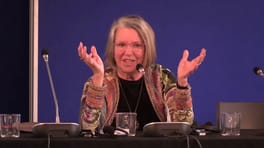
Photo: Medialab Matadero / CC BY 3.0 (source: Wikimedia Commons)
Nancy Fraser is a philosopher, university teacher and sociologist, born on May 20, 1947 in Baltimore, Maryland, United States. As of 2026, Nancy Fraser is 79 years old. Schooling on record includes CUNY Graduate School and University Center. Listed accolades include Honorary doctor of the University of Liège (2015).
My Take
Nancy Fraser is one of those thinkers who makes you feel like the whole political landscape finally clicks into place. Born in Baltimore in 1947 and long based at The New School in New York, she built a career around asking the question that most political philosophers fumble: why isn't economic redistribution enough on its own? Her framework pairing redistribution with recognition — the idea that justice demands both material equality and respect for cultural difference — gave the left a vocabulary it desperately needed and still argues about today. Her critiques of progressive neoliberalism are sharp and genuinely uncomfortable to read if you've ever felt smug about holding the right cultural positions while ignoring structural inequality. She's not flashy, she doesn't do soundbites, but her essays hit harder than most op-ed writers manage in an entire career. A real intellectual's intellectual.
This take was written by generative AI, one per person, from publicly reported facts (editorial policy). It is a reading of the record, not reporting.
1. Profile
- Name (English)
- Nancy Fraser
- Name (Japanese)
- ナンシー・フレイザー
- Reading
- なんしー・ふれいざー
- Born
- May 20, 1947 (age 79)
- Origin
- Baltimore, Maryland, United States
- Occupation
- philosopher / university teacher / sociologist / political scientist / feminist
- Zodiac / Chinese zodiac
- Taurus / Boar
2. Background
- University
- CUNY Graduate School and University Center
Awards & achievements
- 2015 Honorary doctor of the University of Liège
3. Links
4. About this entry
Tags
- Last updated
Only publicly available facts are listed; non-public or unconfirmed items are omitted. Base data was compiled from Wikidata from June 2026 onward; ages are recalculated daily and deaths are checked against Wikidata on an ongoing basis. English text is machine-assisted (facts translated by Sonnet, "My Take" written by Opus 4.8). The Japanese page is the source of record.
Frequently asked questions
When was Nancy Fraser born?
Nancy Fraser was born on May 20, 1947 and is 79 years old.
Where is Nancy Fraser from?
Nancy Fraser is from Baltimore, Maryland, United States.
What does Nancy Fraser do?
Nancy Fraser works as philosopher, university teacher, sociologist, political scientist, feminist.
Where did Nancy Fraser study?
Nancy Fraser attended CUNY Graduate School and University Center.
Philosopher — see all → · University teacher — see all → · More people from the United States → · More people born on May 20 →