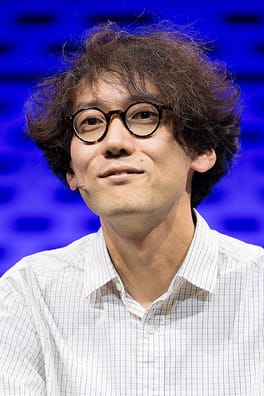
Photo: Martin Kraft / CC BY-SA 4.0 (source: Wikimedia Commons)
My Take
I'll be honest, "Marxist philosopher" usually makes me brace for a brick of a book and a furrowed brow, but Kohei Saito is the rare academic who drags Marx out of the dusty seminar room and plops him right onto your kitchen table. His whole thing is basically "hey, the planet and our way of life can't keep running like this," and he says it in a way that doesn't require a PhD to follow, which is no small trick. I love that he won't stay cozy in the ivory tower, he studied abroad, picked up German, won the Deutscher Memorial Prize young, then turned around and went on TV to actually argue with people. Whether you nod along or yell "nah, that's too far," he gets you to pause and look at your own life, and that, to me, is a guy doing his job.
This take was written by generative AI, one per person, from publicly reported facts (editorial policy). It is a reading of the record, not reporting.
Overview
Kohei Saito is a Japanese philosopher and economist born on January 31, 1987, in Tokyo. He studied at Wesleyan University and is known for his work bridging Marxist theory and contemporary environmental and economic concerns. He received the Isaac and Tamara Deutscher Memorial Prize in 2018, as well as a Freeman Scholarship. His writing and public appearances have brought left ecological thought to broad audiences, particularly younger readers in Japan.
1. Profile
- Name (English)
- Kohei Saito
- Name (Japanese)
- 斎藤幸平
- Reading
- さいとう こうへい
- Born
- January 31, 1987 (age 39)
- Origin
- Tokyo, Japan
- Occupation
- Philosopher / Economist
- Zodiac / Chinese zodiac
- Aquarius / Rabbit
2. Background
- University
- Wesleyan University
Awards & achievements
- Freeman Scholarship (year unknown)
- Isaac and Tamara Deutscher Memorial Prize (2018)
3. Links
4. About this entry
Tags
- Last updated
Only publicly available facts are listed; non-public or unconfirmed items are omitted. Base data was compiled from Wikidata from June 2026 onward; ages are recalculated daily and deaths are checked against Wikidata on an ongoing basis. English text is machine-assisted (facts translated by Sonnet, "My Take" written by Opus 4.8). The Japanese page is the source of record.
Frequently asked questions
When was Kohei Saito born?
Kohei Saito was born on January 31, 1987 and is 39 years old.
Where is Kohei Saito from?
Kohei Saito is from Tokyo, Japan.
What does Kohei Saito do?
Kohei Saito works as Philosopher, Economist.
Where did Kohei Saito study?
Kohei Saito attended Wesleyan University.
Philosopher — see all → · Economist — see all → · More people from Japan → · More people born on January 31 →