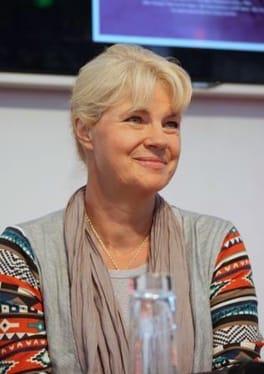
Photo: Animagus / CC BY-SA 4.0 (source: Wikimedia Commons)
Nele Neuhaus is a children's writer, crime fiction writer and young adult author, born on June 20, 1967 in Münster, North Rhine-Westphalia, Germany. As of 2026, Nele Neuhaus is 59 years old. Awards on record include Japan Booksellers' Award (2014).
My Take
Nele Neuhaus is a writer I find quietly impressive for how she anchors her crime thrillers in a real place, the Taunus region near Frankfurt. There is something grounding about that, the sense that the landscape itself is a character. What strikes me most is her range: she also writes romantic novels under her maiden name Lowenberg and pony books for teenagers, which tells me she never wanted to be just one kind of author. Winning Japan's Booksellers' Award in 2014 is a remarkable signal that her German crime fiction translates beautifully across cultures. I think that international reach is the truest mark of her storytelling.
This take was written by generative AI, one per person, from publicly reported facts (editorial policy). It is a reading of the record, not reporting.
1. Profile
- Name (English)
- Nele Neuhaus
- Name (Japanese)
- ネレ・ノイハウス
- Reading
- ねれ・のいはうす
- Born
- June 20, 1967 (age 59)
- Origin
- Münster, North Rhine-Westphalia, Germany
- Occupation
- writer / children's writer / crime fiction writer / young adult author
- Zodiac / Chinese zodiac
- Gemini / Goat
2. Background
Awards & achievements
- 2014 Japan Booksellers' Award
3. Links
- Official sitehttp://www.neleneuhaus.de/en/home.php
- Wikipedia (English)https://en.wikipedia.org/wiki/Nele%20Neuhaus
- Wikipedia (Japanese)https://ja.wikipedia.org/wiki/%E3%83%8D%E3%83%AC%E3%83%BB%E3%83%8E%E3%82%A4%E3%83%8F%E3%82%A6%E3%82%B9
- Wikidatahttps://www.wikidata.org/wiki/Q92152
4. About this entry
Tags
- Last updated
Facts are limited to publicly available information up to 2024; non-public or unconfirmed items are omitted. English text is machine-assisted (facts translated by Sonnet, "My Take" written by Opus 4.8). The Japanese page is the source of record.
Frequently asked questions
When was Nele Neuhaus born?
Born June 20, 1967 (age 59).
Where is Nele Neuhaus from?
Nele Neuhaus is from Münster, North Rhine-Westphalia, Germany.
What does Nele Neuhaus do?
Nele Neuhaus works as writer, children's writer, crime fiction writer, young adult author.
Writer — see all → · Children's writer — see all → · More people from Germany →