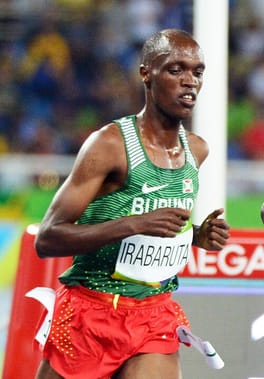
Photo: U.S. Army photo by Tim Hipps / CC BY 2.0 (source: Wikimedia Commons)
Olivier Irabaruta was born on August 25, 1990 in Muramvya, Gitega Province, Burundi. Public records list Olivier Irabaruta as an athletics competitor, musician and long-distance runner. That works out to 36 years old in 2026. The listed height is 171 cm.
My Take
Olivier Irabaruta is the kind of athlete medal tables quietly erase, and that's exactly why he interests me. Born in Muramvya in Burundi's Gitega Province, he ran the 5000m at London 2012 and both the 5000m and 10,000m at Rio 2016, never reaching a final. But carrying a small Central African nation's flag onto the Olympic track twice is its own achievement, one that has little to do with finishing position. That he's also a musician rounds him out into someone more textured than a results sheet. I value the simple act of arriving on the world stage, and he did it more than once.
This take was written by generative AI, one per person, from publicly reported facts (editorial policy). It is a reading of the record, not reporting.
1. Profile
- Name (English)
- Olivier Irabaruta
- Name (Japanese)
- オリヴィエ・イラバルタ
- Reading
- おりゔぃえ・いらばるた
- Born
- August 25, 1990 (age 36)
- Origin
- Muramvya, Gitega Province, Burundi
- Height
- 171 cm
- Occupation
- athletics competitor / musician / long-distance runner
- Zodiac / Chinese zodiac
- Virgo / Horse
2. Links
3. About this entry
Tags
- Last updated
Facts are limited to publicly available information up to 2024; non-public or unconfirmed items are omitted. English text is machine-assisted (facts translated by Sonnet, "My Take" written by Opus 4.8). The Japanese page is the source of record.
Frequently asked questions
When was Olivier Irabaruta born?
Born August 25, 1990 (age 36).
Where is Olivier Irabaruta from?
Olivier Irabaruta is from Muramvya, Gitega Province, Burundi.
What does Olivier Irabaruta do?
Olivier Irabaruta works as athletics competitor, musician, long-distance runner.
How tall is Olivier Irabaruta?
Olivier Irabaruta is 171 cm.