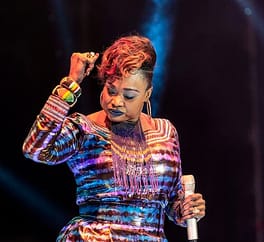
Photo: Diario de Madrid / CC BY 4.0 (source: Wikimedia Commons)
Oumou Sangaré was born in Bamako, Mali on February 12, 1968. Oumou Sangaré is credited as a singer, songwriter and musician. The age as of 2026 is 58. Listed accolades include OkayAfrica 100 Women (2018), Commandeur des Arts et des Lettres (1998), Commander of the National Order of Mali (2015) and 1 more.
My Take
Oumou Sangaré is, for me, one of the great voices to come out of West Africa. Rooted in the Wassoulou tradition of southern Mali and often called its songbird, she fused age-old, calabash-driven music with fearless songs about women's dignity and freedom. Being named Commandeur des Arts et des Lettres and winning the 2024 Rolf Schock Prize shows how far that voice has traveled beyond Bamako. What moves me is how she carries something universal inside something deeply local. She deserves a far wider audience, and I wish more listeners outside Africa knew her name.
This take was written by generative AI, one per person, from publicly reported facts (editorial policy). It is a reading of the record, not reporting.
1. Profile
- Name (English)
- Oumou Sangaré
- Name (Japanese)
- アウマウ・サンガレ
- Reading
- あうまう・さんがれ
- Born
- February 12, 1968 (age 58)
- Origin
- Bamako, Mali
- Occupation
- singer / songwriter / musician
- Zodiac / Chinese zodiac
- Aquarius / Monkey
2. Background
Awards & achievements
- 2018 OkayAfrica 100 Women
- 1998 Commandeur des Arts et des Lettres
- 2015 Commander of the National Order of Mali
- 2024 Rolf Schock Prizes
3. Links
- Official sitehttp://www.oumousangare.co.uk
- Wikipedia (English)https://en.wikipedia.org/wiki/Oumou%20Sangar%C3%A9
- Wikipedia (Japanese)https://ja.wikipedia.org/wiki/%E3%82%A6%E3%83%A0%E3%83%BB%E3%82%B5%E3%83%B3%E3%82%AC%E3%83%AC
- Wikidatahttps://www.wikidata.org/wiki/Q467094
4. About this entry
Tags
- Last updated
Facts are limited to publicly available information up to 2024; non-public or unconfirmed items are omitted. English text is machine-assisted (facts translated by Sonnet, "My Take" written by Opus 4.8). The Japanese page is the source of record.
Frequently asked questions
When was Oumou Sangaré born?
Born February 12, 1968 (age 58).
Where is Oumou Sangaré from?
Oumou Sangaré is from Bamako, Mali.
What does Oumou Sangaré do?
Oumou Sangaré works as singer, songwriter, musician.
Singer — see all → · Songwriter — see all → · More people from Mali →