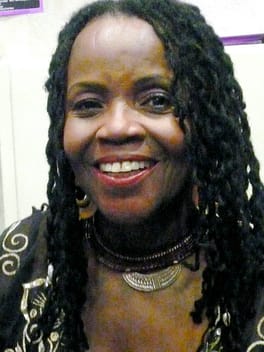
Photo: Josie Fraser / CC BY-SA 2.0 (source: Wikimedia Commons)
My Take
P. P. Arnold is a soul powerhouse who never quite got the household-name status she earned, and that frustrates me. Her version of The First Cut Is the Deepest predates the more famous covers, and her voice has this raw, gospel-rooted ache that cuts straight through. The fact that she went from an Ikette to a London scene fixture, working alongside the Small Faces and the Rolling Stones circle, says everything about her talent and resilience. Her late-career comeback records prove the instrument never faded. She is a genuine soul treasure who deserves a much bigger spotlight.
This take was written by generative AI, one per person, from publicly reported facts (editorial policy). It is a reading of the record, not reporting.
Overview
P. P. Arnold (born Patricia Ann Cole on October 3, 1946) is an American soul singer who rose to prominence in the United Kingdom in the 1960s. After starting out as an Ikette with Ike & Tina Turner, she launched a solo career in Britain, scoring hits including 'The First Cut Is the Deepest' and 'Angel of the Morning.' She has worked with numerous artists across rock and soul over a long and varied career.
1. Profile
- Name (English)
- P. P. Arnold
- Name (Japanese)
- P・P・アーノルド
- Reading
- P・P・あーのるど
- Born
- October 3, 1946 (age 79)
- Origin
- Los Angeles, California, United States
- Occupation
- Singer / Musician
- Zodiac / Chinese zodiac
- Libra / Dog
2. Links
- Official sitehttps://www.pparnold.com/
- Wikipedia (English)https://en.wikipedia.org/wiki/P.%20P.%20Arnold
- Wikipedia (Japanese)https://ja.wikipedia.org/wiki/P%E3%83%BBP%E3%83%BB%E3%82%A2%E3%83%BC%E3%83%8E%E3%83%AB%E3%83%89
- Wikidatahttps://www.wikidata.org/wiki/Q469825
3. About this entry
Tags
- Last updated
Facts are limited to publicly available information up to 2024; non-public or unconfirmed items are omitted. English text is machine-assisted (facts translated by Sonnet, "My Take" written by Opus 4.8). The Japanese page is the source of record.
Frequently asked questions
When was P. P. Arnold born?
Born October 3, 1946 (age 79).
Where is P. P. Arnold from?
P. P. Arnold is from Los Angeles, California, United States.
What does P. P. Arnold do?
P. P. Arnold works as Singer, Musician.
Singer — see all → · Musician — see all → · More people from the United States →