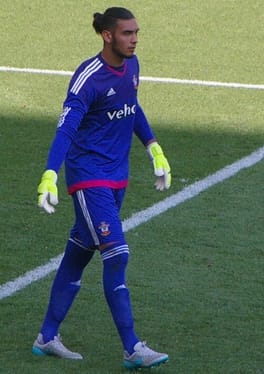
Photo: Werner100359 / CC BY-SA 4.0 (source: Wikimedia Commons)
Paulo Gazzaniga is an association football player. Born on January 2, 1992, Paulo Gazzaniga is from Murphy, General López Department, Argentina. That works out to 34 years old in 2026. The listed height is 196 cm.
My Take
Paulo Gazzaniga is the kind of goalkeeper I find easy to root for. An Argentine born in 1992, he plays in La Liga for Girona, and at a towering 196 cm he has exactly the frame you want guarding a goal. What strikes me about keepers like him is how much patience the role demands, often years of being the understudy before getting a real run of starts. I like that he has carved out a steady top-flight career rather than burning bright and fading. He is not a household name outside football circles, but the people who watch the position closely tend to appreciate what a reliable shot-stopper brings.
This take was written by generative AI, one per person, from publicly reported facts (editorial policy). It is a reading of the record, not reporting.
1. Profile
- Name (English)
- Paulo Gazzaniga
- Name (Japanese)
- パウロ・ガッサニーガ
- Reading
- ぱうろ・がっさにーが
- Born
- January 2, 1992 (age 34)
- Origin
- Murphy, General López Department, Argentina
- Height
- 196 cm
- Occupation
- association football player
- Zodiac / Chinese zodiac
- Capricorn / Monkey
2. Links
- Instagramhttps://www.instagram.com/gazzanigapaulo/
- Xhttps://x.com/gazzanigapaulo
- Wikipedia (English)https://en.wikipedia.org/wiki/Paulo%20Gazzaniga
- Wikipedia (Japanese)https://ja.wikipedia.org/wiki/%E3%83%91%E3%82%A6%E3%83%AD%E3%83%BB%E3%82%AC%E3%83%83%E3%82%B5%E3%83%8B%E3%83%BC%E3%82%AC
- Wikidatahttps://www.wikidata.org/wiki/Q93578
3. About this entry
Tags
- Last updated
Facts are limited to publicly available information up to 2024; non-public or unconfirmed items are omitted. English text is machine-assisted (facts translated by Sonnet, "My Take" written by Opus 4.8). The Japanese page is the source of record.
Frequently asked questions
When was Paulo Gazzaniga born?
Born January 2, 1992 (age 34).
Where is Paulo Gazzaniga from?
Paulo Gazzaniga is from Murphy, General López Department, Argentina.
What does Paulo Gazzaniga do?
Paulo Gazzaniga works as association football player.
How tall is Paulo Gazzaniga?
Paulo Gazzaniga is 196 cm.
Association football player — see all → · More people from Argentina →