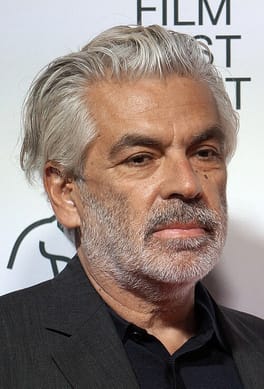
Photo: Joost Pauwels / CC0 (source: Wikimedia Commons)
Pedro Costa is a film director, screenwriter and film editor. Pedro Costa was born in Lisbon, Portugal on December 30, 1959. The age as of 2026 is 66. Schooling on record includes University of Lisbon. Awards on record include Prix France Culture Cinéma (2002) and Annual award ACFK (2013).
My Take
Pedro Costa is one of those filmmakers who genuinely makes you reconsider what cinema can be, and I mean that as the highest compliment. This Lisbon-born director built an entire world out of the Fontainhas neighborhood — a cramped, crumbling Cape Verdean immigrant community on the outskirts of the city — and turned it into something mythic without ever glamorizing it. What gets me is how he does everything himself: directs, shoots, edits, lights. The images he pulls out of those narrow corridors and dim rooms are some of the most deliberately composed things I've seen on screen, closer to painting than photography. Films like Ossos, In Vanda's Room, and Colossal Youth rewarded patience in a way that almost no commercial cinema bothers to attempt. He's not for everyone — the pace is slow, the silences are long — but if you let his work in, it genuinely lingers.
This take was written by generative AI, one per person, from publicly reported facts (editorial policy). It is a reading of the record, not reporting.
1. Profile
- Name (English)
- Pedro Costa
- Name (Japanese)
- ペドロ・コスタ
- Reading
- ぺどろ・こすた
- Born
- December 30, 1959 (age 66)
- Origin
- Lisbon, Portugal
- Occupation
- film director / screenwriter / film editor / cinematographer / lighting designer
- Zodiac / Chinese zodiac
- Capricorn / Boar
2. Background
- University
- University of Lisbon
Awards & achievements
- 2002 Prix France Culture Cinéma
- 2013 Annual award ACFK
3. Links
- Wikipedia (English)https://en.wikipedia.org/wiki/Pedro%20Costa
- Wikipedia (Japanese)https://ja.wikipedia.org/wiki/%E3%83%9A%E3%83%89%E3%83%AD%E3%83%BB%E3%82%B3%E3%82%B9%E3%82%BF
- Wikidatahttps://www.wikidata.org/wiki/Q1354061
4. About this entry
Tags
- Last updated
Only publicly available facts are listed; non-public or unconfirmed items are omitted. Base data was compiled from Wikidata from June 2026 onward; ages are recalculated daily and deaths are checked against Wikidata on an ongoing basis. English text is machine-assisted (facts translated by Sonnet, "My Take" written by Opus 4.8). The Japanese page is the source of record.
Frequently asked questions
When was Pedro Costa born?
Pedro Costa was born on December 30, 1959 and is 66 years old.
Where is Pedro Costa from?
Pedro Costa is from Lisbon, Portugal.
What does Pedro Costa do?
Pedro Costa works as film director, screenwriter, film editor, cinematographer, lighting designer.
Where did Pedro Costa study?
Pedro Costa attended University of Lisbon.
Film director — see all → · Screenwriter — see all → · More people from Portugal → · More people born on December 30 →