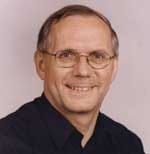
Photo: Wilhelm Wienemann (Kalwien at de.wikipedia) / CC BY-SA 3.0 (source: Wikimedia Commons)
Philip Sparke is credited as a conductor, composer and trumpeter. Born on December 29, 1951, Philip Sparke is from London, United Kingdom. The age as of 2026 is 74. Education on record includes Royal College of Music. Credited works include The sunken village.
My Take
Philip Sparke is one of those composers who doesn't get the mainstream spotlight but absolutely deserves it — if you've ever played in a concert band or brass band, there's a solid chance his name is on the music stand in front of you. Born in London in 1951, he studied at the Royal College of Music and came up as a trumpeter himself, which you can feel in how idiomatically he writes for brass. What I genuinely admire is that he planted his flag in the wind band and brass band world and never chased prestige elsewhere — he just kept writing, and the quality speaks for itself. Works like The Land of the Long White Cloud and The Sunken Village have become staples for ensembles worldwide. He's the craftsman's craftsman: no celebrity circus, just decades of music that players love to perform. That kind of career is underrated and honestly pretty rare.
This take was written by generative AI, one per person, from publicly reported facts (editorial policy). It is a reading of the record, not reporting.
1. Profile
- Name (English)
- Philip Sparke
- Name (Japanese)
- フィリップ・スパーク
- Reading
- ふぃりっぷ・すぱーく
- Born
- December 29, 1951 (age 74)
- Origin
- London, United Kingdom
- Occupation
- conductor / composer / trumpeter / musician / music arranger
- Zodiac / Chinese zodiac
- Capricorn / Rabbit
2. Background
- University
- Royal College of Music
3. Works & records
Filmography / notable works
| Category | Title |
|---|---|
| Notable work | The sunken village |
4. Links
- Official sitehttps://www.philipsparke.com/
- Wikipedia (English)https://en.wikipedia.org/wiki/Philip%20Sparke
- Wikipedia (Japanese)https://ja.wikipedia.org/wiki/%E3%83%95%E3%82%A3%E3%83%AA%E3%83%83%E3%83%97%E3%83%BB%E3%82%B9%E3%83%91%E3%83%BC%E3%82%AF
- Wikidatahttps://www.wikidata.org/wiki/Q1349008
5. About this entry
Tags
- Last updated
Only publicly available facts are listed; non-public or unconfirmed items are omitted. Base data was compiled from Wikidata from June 2026 onward; ages are recalculated daily and deaths are checked against Wikidata on an ongoing basis. English text is machine-assisted (facts translated by Sonnet, "My Take" written by Opus 4.8). The Japanese page is the source of record.
Frequently asked questions
When was Philip Sparke born?
Philip Sparke was born on December 29, 1951 and is 74 years old.
Where is Philip Sparke from?
Philip Sparke is from London, United Kingdom.
What does Philip Sparke do?
Philip Sparke works as conductor, composer, trumpeter, musician, music arranger.
Where did Philip Sparke study?
Philip Sparke attended Royal College of Music.
What is Philip Sparke known for?
Philip Sparke's notable works include The sunken village.
Conductor — see all → · Composer — see all → · More people from the United Kingdom → · More people born on December 29 →