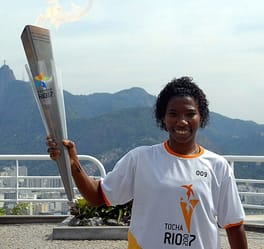
Photo: Marcello Casal (ABr) / CC BY 3.0 br (source: Wikimedia Commons)
Pretinha is an association football player. Pretinha was born in Rio de Janeiro, Brazil on May 19, 1975. The age as of 2026 is 51. The listed height is 157 cm.
My Take
Pretinha deserves recognition as a true pioneer of women's football. Debuting for Brazil back in 1991, she was competing when the women's game still lived in the shadows worldwide, and that alone commands respect. Her willingness to play across Brazil, the United States, Japan and South Korea shows a restless ambition rare in any era. As a longtime forward who later turned to coaching, she did the most meaningful thing a trailblazer can do: pass the path forward to the next generation. I see her as one of the foundational figures who built Brazilian women's football into what it is today.
This take was written by generative AI, one per person, from publicly reported facts (editorial policy). It is a reading of the record, not reporting.
1. Profile
- Name (English)
- Pretinha
- Name (Japanese)
- デルマ・ゴンサルベス
- Reading
- でるま・ごんさるべす
- Born
- May 19, 1975 (age 51)
- Origin
- Rio de Janeiro, Brazil
- Height
- 157 cm
- Occupation
- association football player
- Zodiac / Chinese zodiac
- Taurus / Rabbit
2. Links
3. About this entry
Tags
- Last updated
Facts are limited to publicly available information up to 2024; non-public or unconfirmed items are omitted. English text is machine-assisted (facts translated by Sonnet, "My Take" written by Opus 4.8). The Japanese page is the source of record.
Frequently asked questions
When was Pretinha born?
Born May 19, 1975 (age 51).
Where is Pretinha from?
Pretinha is from Rio de Janeiro, Brazil.
What does Pretinha do?
Pretinha works as association football player.
How tall is Pretinha?
Pretinha is 157 cm.
Association football player — see all → · More people from Brazil →