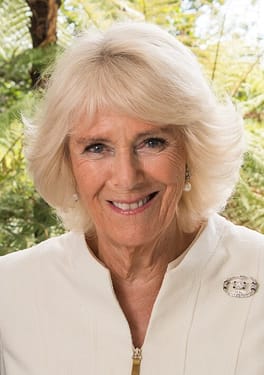
Photo: Mark Tantrum / CC BY 4.0 (source: Wikimedia Commons)
Queen Camilla, born on July 17, 1947 in London Borough of Lambeth, United Kingdom, is an activist, philanthropist and secretary. Queen Camilla is 79 years old as of 2026. Schooling on record includes University of London Institute in Paris. Awards on record include Dame Grand Cross of the Royal Victorian Order (2012), Grand Cross of the National Order of Merit (2014), Order of the Star of Melanesia (2012) and 5 more.
My Take
What fascinates me about Queen Camilla is the sheer arc of public redemption. For decades she was cast as the villain in someone else's fairy tale, and the easy path would have been retreat. Instead she kept showing up, quietly and consistently, for literacy and charitable causes until the work itself rewrote the narrative. The string of honors from France, Germany, and beyond suggests that respect earned slowly tends to stick. I find her a study in patience: not charismatic in the conventional royal sense, but durable, self-deprecating, and unbothered. In an age of instant image management, a rehabilitation achieved through simple persistence over decades feels almost radical.
This take was written by generative AI, one per person, from publicly reported facts (editorial policy). It is a reading of the record, not reporting.
1. Profile
- Name (English)
- Queen Camilla
- Name (Japanese)
- カミラ
- Reading
- かみら
- Born
- July 17, 1947 (age 79)
- Origin
- London Borough of Lambeth, United Kingdom
- Occupation
- activist / philanthropist / secretary
- Zodiac / Chinese zodiac
- Cancer / Boar
2. Background
- University
- University of London Institute in Paris
Awards & achievements
- 2012 Dame Grand Cross of the Royal Victorian Order
- 2014 Grand Cross of the National Order of Merit
- 2012 Order of the Star of Melanesia
- Order of the Aztec Eagle
- 2023 Grand Cross 1st class of the Order of Merit of the Federal Republic of Germany
- 2022 Lady of the Garter
- 2023 Honorary Member of the New Zealand Order of Merit
- Order of the Thistle
3. Links
- Official sitehttps://www.royal.uk/the-queen
- Wikipedia (English)https://en.wikipedia.org/wiki/Queen%20Camilla
- Wikipedia (Japanese)https://ja.wikipedia.org/wiki/%E3%82%AB%E3%83%9F%E3%83%A9%20(%E3%82%A4%E3%82%AE%E3%83%AA%E3%82%B9%E7%8E%8B%E5%A6%83)
- Wikidatahttps://www.wikidata.org/wiki/Q152239
4. About this entry
Tags
- Last updated
Facts are limited to publicly available information up to 2024; non-public or unconfirmed items are omitted. English text is machine-assisted (facts translated by Sonnet, "My Take" written by Opus 4.8). The Japanese page is the source of record.
Frequently asked questions
When was Queen Camilla born?
Born July 17, 1947 (age 79).
Where is Queen Camilla from?
Queen Camilla is from London Borough of Lambeth, United Kingdom.
What does Queen Camilla do?
Queen Camilla works as activist, philanthropist, secretary.
Activist — see all → · Philanthropist — see all → · More people from the United Kingdom →