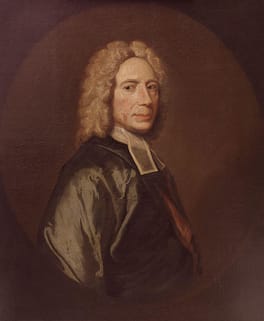
Photo: anonymous / Public domain (source: Wikimedia Commons)
Born on July 17, 1674 in Southampton, United Kingdom, Isaac Watts was a theologian, philosopher and poet. Isaac Watts died on November 25, 1748 at the age of 74. Credited works include Our God, Our Help in Ages Past, Come, We Who Love the Lord and From All That Dwell Below the Skies.
My Take
Most people humming "Joy to the World" have no idea they're singing words an English minister wrote three centuries ago. That's the highest compliment I can pay Isaac Watts. With some 750 hymns to his name, the man was a theologian and philosopher who could have buried his ideas in dense argument, yet he chose to make faith singable for ordinary people. I value that translation of complexity into something a child can carry. Influence that survives the collapse of empires and the turn of centuries, still on millions of lips every December, is the rarest kind of authorship there is.
This take was written by generative AI, one per person, from publicly reported facts (editorial policy). It is a reading of the record, not reporting.
1. Profile
- Name (English)
- Isaac Watts
- Name (Japanese)
- アイザック・ウォッツ
- Reading
- あいざっく・うぉっつ
- Born
- July 17, 1674 – November 25, 1748
- Origin
- Southampton, United Kingdom
- Occupation
- theologian / philosopher / poet / hymnwriter / writer
- Zodiac / Chinese zodiac
- Cancer / Tiger
2. Works & records
Filmography / notable works
| Category | Title |
|---|---|
| Notable work | Our God, Our Help in Ages Past |
| Notable work | Come, We Who Love the Lord |
| Notable work | From All That Dwell Below the Skies |
| Notable work | Joy to the World |
3. Links
4. About this entry
Tags
- Last updated
Facts are limited to publicly available information up to 2024; non-public or unconfirmed items are omitted. English text is machine-assisted (facts translated by Sonnet, "My Take" written by Opus 4.8). The Japanese page is the source of record.
Frequently asked questions
When was Isaac Watts born?
Born July 17, 1674.
When did Isaac Watts die?
Died November 25, 1748, aged 74.
Where was Isaac Watts from?
Isaac Watts was from Southampton, United Kingdom.
What did Isaac Watts do?
Isaac Watts worked as theologian, philosopher, poet, hymnwriter, writer.
What was Isaac Watts known for?
Notable works include Our God, Our Help in Ages Past, Come, We Who Love the Lord, From All That Dwell Below the Skies.
Theologian — see all → · Philosopher — see all → · More people from the United Kingdom →