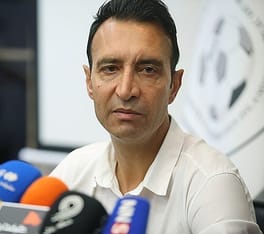
Photo: Mohammad Hassanzadeh / CC BY 4.0 (source: Wikimedia Commons)
Public records list Reza Enayati as an association football player and association football coach. Reza Enayati was born in Mashhad, Razavi Khorasan Province, Iran on September 23, 1976. That works out to 49 years old in 2026. The listed height is 178 cm.
My Take
What grabs me about Enayati is not just that he scored goals, but that he became the all-time top scorer in the Persian Gulf Pro League while standing at a modest 178 cm. That tells me everything: this was a striker who lived on instinct, positioning, and relentless will rather than raw size. Rising from Mashhad to the summit of Iranian football, then handing that goalscoring wisdom to younger players as a coach, gives his career a satisfying arc. He may not be a global household name, but within Iranian football his record is untouchable, and I deeply respect that kind of quiet, durable greatness.
This take was written by generative AI, one per person, from publicly reported facts (editorial policy). It is a reading of the record, not reporting.
1. Profile
- Name (English)
- Reza Enayati
- Name (Japanese)
- レザー・エナーヤティー
- Reading
- れざー・えなーやてぃー
- Born
- September 23, 1976 (age 49)
- Origin
- Mashhad, Razavi Khorasan Province, Iran
- Height
- 178 cm
- Occupation
- association football player / association football coach
- Zodiac / Chinese zodiac
- Libra / Dragon
2. Links
3. About this entry
Tags
- Last updated
Facts are limited to publicly available information up to 2024; non-public or unconfirmed items are omitted. English text is machine-assisted (facts translated by Sonnet, "My Take" written by Opus 4.8). The Japanese page is the source of record.
Frequently asked questions
When was Reza Enayati born?
Born September 23, 1976 (age 49).
Where is Reza Enayati from?
Reza Enayati is from Mashhad, Razavi Khorasan Province, Iran.
What does Reza Enayati do?
Reza Enayati works as association football player, association football coach.
How tall is Reza Enayati?
Reza Enayati is 178 cm.
Association football player — see all → · Association football coach — see all → · More people from Iran →