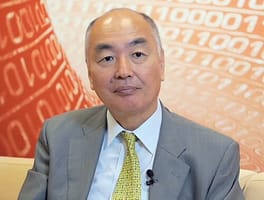
Photo: MeJudice / CC BY 3.0 (source: Wikimedia Commons)
My Take
I'll be honest, Rintarō Tamaki isn't the kind of name that lights up a fan feed, and that's exactly why I find him interesting. Born in Tokyo in 1953, University of Tokyo pedigree, and a career built in the rooms where the boring-but-load-bearing decisions about money and policy actually get made. There's no scandal reel here, no flashy anecdotes, and I kind of respect that the record stays quiet. People who spend their lives wrangling numbers and systems tend to choose their words carefully, so when someone like this speaks, I lean in. Steady, unglamorous, genuinely useful. Honestly a little reassuring.
This take was written by generative AI, one per person, from publicly reported facts (editorial policy). It is a reading of the record, not reporting.
Overview
Rintaro Tamaki is a Japanese executive born in 1953 in Tokyo. A graduate of the University of Tokyo's Faculty of Law, he rose through the Ministry of Finance to become Director-General of its International Bureau and Vice-Minister of Finance for International Affairs, then served as Deputy Secretary-General of the OECD, and now chairs the Japan Center for International Finance.
1. Profile
- Name (English)
- Rintaro Tamaki
- Name (Japanese)
- 玉木林太郎
- Reading
- たまき りんたろう
- Born
- 1953
- Origin
- Tokyo, Japan
- Occupation
- Chief Officer
- Zodiac / Chinese zodiac
- Snake
2. Background
- University
- The University of Tokyo
3. Links
4. About this entry
Tags
- Last updated
Only publicly available facts are listed; non-public or unconfirmed items are omitted. Base data was compiled from Wikidata from June 2026 onward; ages are recalculated daily and deaths are checked against Wikidata on an ongoing basis. English text is machine-assisted (facts translated by Sonnet, "My Take" written by Opus 4.8). The Japanese page is the source of record.
Frequently asked questions
Where is Rintaro Tamaki from?
Rintaro Tamaki is from Tokyo, Japan.
What does Rintaro Tamaki do?
Rintaro Tamaki works as Chief Officer.
Where did Rintaro Tamaki study?
Rintaro Tamaki attended The University of Tokyo.