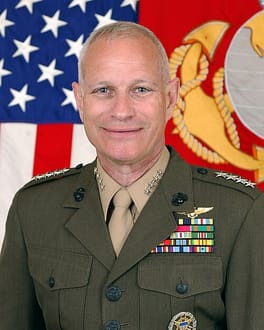
Photo: United States Marine Corps / Public domain (source: Wikimedia Commons)
Robert Magnus was born in Brooklyn, New York, United States on April 28, 1947. Robert Magnus is credited as a military officer. The age as of 2026 is 79. Listed accolades include Navy Distinguished Service Medal, Defense Superior Service Medal, Achievement Medal and 1 more.
My Take
Robert Magnus commands a different kind of attention from me. Rising from Brooklyn to four-star general and serving as the 30th Assistant Commandant of the Marine Corps, with 38 years of service, is a life poured almost entirely into one institution. The decorations, the Navy Distinguished Service Medal and the Legion of Merit among them, read less like trophies and more like accumulated responsibility. I hold no view on the politics of war, but sustaining integrity and climbing to the top of a single organization across nearly four decades takes a discipline I genuinely admire. His record speaks of steadiness over spectacle.
This take was written by generative AI, one per person, from publicly reported facts (editorial policy). It is a reading of the record, not reporting.
1. Profile
- Name (English)
- Robert Magnus
- Name (Japanese)
- ロバート・マグナス
- Reading
- ろばーと・まぐなす
- Born
- April 28, 1947 (age 79)
- Origin
- Brooklyn, New York, United States
- Occupation
- military officer
- Zodiac / Chinese zodiac
- Taurus / Boar
2. Background
Awards & achievements
- Navy Distinguished Service Medal
- Defense Superior Service Medal
- Achievement Medal
- Legionnaire of Legion of Merit
3. Links
4. About this entry
Tags
- Last updated
Facts are limited to publicly available information up to 2024; non-public or unconfirmed items are omitted. English text is machine-assisted (facts translated by Sonnet, "My Take" written by Opus 4.8). The Japanese page is the source of record.
Frequently asked questions
When was Robert Magnus born?
Born April 28, 1947 (age 79).
Where is Robert Magnus from?
Robert Magnus is from Brooklyn, New York, United States.
What does Robert Magnus do?
Robert Magnus works as military officer.
Military officer — see all → · More people from the United States →