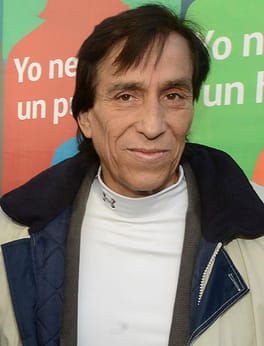
Photo: Modificación_a_la_Ley_del_Donante_Universal.jpg: tu Foto con el Presidente derivative work: Warko / CC BY 2.0 (source: Wikimedia Commons)
Roberto Rojas is an association football player, association football coach and beach soccer player. Roberto Rojas was born on August 8, 1957 in Santiago, Santiago Metropolitan Region, Chile. The age as of 2026 is 69.
My Take
Roberto Rojas, nicknamed El Cóndor, is one of the most cautionary tales in football history, and I can't look away from it. A talented Chilean goalkeeper, he engineered one of the sport's most infamous scandals: in a 1989 World Cup qualifier he faked an injury, reportedly cutting himself, to try to get the match annulled. The deception unraveled spectacularly, earning him a lifetime ban and costing Chile a World Cup. What strikes me is how a single desperate act can erase real ability. His ban was lifted in 2001, but the legend of the staged wound endures far beyond any save he made.
This take was written by generative AI, one per person, from publicly reported facts (editorial policy). It is a reading of the record, not reporting.
1. Profile
- Name (English)
- Roberto Rojas
- Name (Japanese)
- ロベルト・ロハス
- Reading
- ろべると・ろはす
- Born
- August 8, 1957 (age 69)
- Origin
- Santiago, Santiago Metropolitan Region, Chile
- Occupation
- association football player / association football coach / beach soccer player
- Zodiac / Chinese zodiac
- Leo / Rooster
2. Links
- Wikipedia (English)https://en.wikipedia.org/wiki/Roberto%20Rojas
- Wikipedia (Japanese)https://ja.wikipedia.org/wiki/%E3%83%AD%E3%83%99%E3%83%AB%E3%83%88%E3%83%BB%E3%83%AD%E3%83%8F%E3%82%B9
- Wikidatahttps://www.wikidata.org/wiki/Q719023
3. About this entry
Tags
- Last updated
Facts are limited to publicly available information up to 2024; non-public or unconfirmed items are omitted. English text is machine-assisted (facts translated by Sonnet, "My Take" written by Opus 4.8). The Japanese page is the source of record.
Frequently asked questions
When was Roberto Rojas born?
Born August 8, 1957 (age 69).
Where is Roberto Rojas from?
Roberto Rojas is from Santiago, Santiago Metropolitan Region, Chile.
What does Roberto Rojas do?
Roberto Rojas works as association football player, association football coach, beach soccer player.
Association football player — see all → · Association football coach — see all → · More people from Chile →