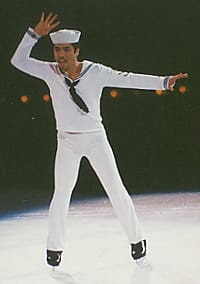
Photo: The original uploader was Vesperholly at English Wikipedia. / CC BY-SA 2.5 (source: Wikimedia Commons)
Rudy Galindo, born on September 7, 1969 in San Jose, California, United States, is a figure skater, figure skating choreographer and performing artist. As of 2026, Rudy Galindo is 57 years old. The listed height is 168 cm.
My Take
Rudy Galindo's story moves me more than most medals can. Winning U.S. pairs titles with Kristi Yamaguchi, then capturing the 1996 U.S. singles championship on home ice in San Jose, is the kind of arc that feels scripted yet was hard-won through real adversity. What I respect most is that he skated as himself, refusing to perform a sanitized version of who he was, in a sport that often demanded conformity. Beneath figure skating's glitter, Galindo carried a quieter, tougher kind of courage, and that stays with me.
This take was written by generative AI, one per person, from publicly reported facts (editorial policy). It is a reading of the record, not reporting.
1. Profile
- Name (English)
- Rudy Galindo
- Name (Japanese)
- ルディ・ガリンド
- Reading
- るでぃ・がりんど
- Born
- September 7, 1969 (age 57)
- Origin
- San Jose, California, United States
- Height
- 168 cm
- Occupation
- figure skater / figure skating choreographer / performing artist
- Zodiac / Chinese zodiac
- Virgo / Rooster
2. Links
- Official sitehttps://www.rudy-galindo.com/
- Instagramhttps://www.instagram.com/rudyvalgalindo/
- Xhttps://x.com/rudyvalgalindo
- Wikipedia (English)https://en.wikipedia.org/wiki/Rudy%20Galindo
- Wikipedia (Japanese)https://ja.wikipedia.org/wiki/%E3%83%AB%E3%83%87%E3%82%A3%E3%83%BB%E3%82%AC%E3%83%AA%E3%83%B3%E3%83%89
- Wikidatahttps://www.wikidata.org/wiki/Q2001375
3. About this entry
Tags
- Last updated
Facts are limited to publicly available information up to 2024; non-public or unconfirmed items are omitted. English text is machine-assisted (facts translated by Sonnet, "My Take" written by Opus 4.8). The Japanese page is the source of record.
Frequently asked questions
When was Rudy Galindo born?
Born September 7, 1969 (age 57).
Where is Rudy Galindo from?
Rudy Galindo is from San Jose, California, United States.
What does Rudy Galindo do?
Rudy Galindo works as figure skater, figure skating choreographer, performing artist.
How tall is Rudy Galindo?
Rudy Galindo is 168 cm.
Figure skater — see all → · Figure skating choreographer — see all → · More people from the United States →