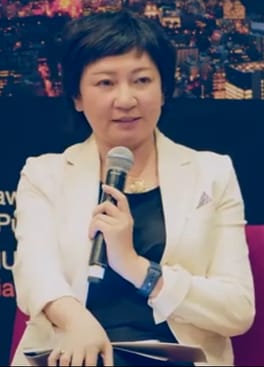
Photo: ANU TV / CC BY 3.0 (source: Wikimedia Commons)
My Take
Rumi Aoyama is one of those quietly formidable figures in Japanese academia — a political scientist born in 1967 who built her career on serious scholarly work rather than flashy media presence. A Keio University graduate, which already signals a certain intellectual rigor and commitment to getting things right, she's the kind of analyst you want in the room when geopolitical situations get complicated. Today she teaches at Waseda's Graduate School of Asia-Pacific Studies and heads its institute of contemporary Chinese studies, which is exactly where someone whose currency is ideas belongs. In an era drowning in hot opinion, a disciplined political scientist who does the actual work is genuinely underrated.
This take was written by generative AI, one per person, from publicly reported facts (editorial policy). It is a reading of the record, not reporting.
Overview
Rumi Aoyama is a Japanese political scientist born in 1967. She is a graduate of Keio University. She is a professor at Waseda University's Graduate School of Asia-Pacific Studies and director of the Waseda Institute of Contemporary Chinese Studies.
1. Profile
- Name (English)
- Rumi Aoyama
- Name (Japanese)
- 青山瑠妙
- Reading
- あおやま るみ
- Born
- 1967
- Origin
- Japan
- Occupation
- Political scientist
- Zodiac / Chinese zodiac
- Goat
2. Background
- University
- Keio University
3. Links
- Wikipedia (Japanese)https://ja.wikipedia.org/wiki/%E9%9D%92%E5%B1%B1%E7%91%A0%E5%A6%99
- Wikidatahttps://www.wikidata.org/wiki/Q41698747
4. About this entry
Tags
- Last updated
Only publicly available facts are listed; non-public or unconfirmed items are omitted. Base data was compiled from Wikidata from June 2026 onward; ages are recalculated daily and deaths are checked against Wikidata on an ongoing basis. English text is machine-assisted (facts translated by Sonnet, "My Take" written by Opus 4.8). The Japanese page is the source of record.
Frequently asked questions
Where is Rumi Aoyama from?
Rumi Aoyama is from Japan.
What does Rumi Aoyama do?
Rumi Aoyama works as Political scientist.
Where did Rumi Aoyama study?
Rumi Aoyama attended Keio University.