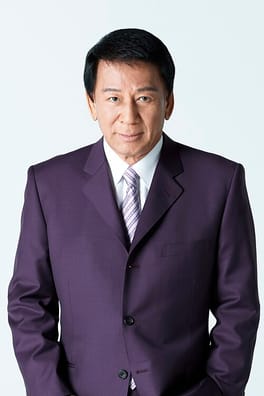
Photo: 大臣官房人事課 / CC BY 4.0 (source: Wikimedia Commons)
Public records list Ryōtarō Sugi as a singer, lyricist and film actor. Ryōtarō Sugi was born on August 14, 1944 in Nagata-ku, Hyōgo Prefecture, Japan. That works out to 82 years old in 2026. Awards on record include Medal with Purple Ribbon (2009), Person of Cultural Merit (2016), Elan d'or Award for Newcomer of the Year (1967) and 1 more. The listed height is 178 cm.
My Take
Ryotaro Sugi does not belong in the usual celebrity-does-charity box. Born in Kobe in 1944, he became a star of period drama and the singer behind Sukimakaze, and Japan has given him the Medal with Purple Ribbon and named him a Person of Cultural Merit. The part I keep thinking about, though, is the other career: decades of prison visits, food kitchens at disaster sites, and support work in Vietnam, much of it funded out of his own pocket. When a reporter suggested it was hypocrisy staged for the cameras, he answered flatly that yes, he is a hypocrite. That reply ends the argument. He does not defend his motives; he simply outworks the doubt.
This take was written by generative AI, one per person, from publicly reported facts (editorial policy). It is a reading of the record, not reporting.
1. Profile
- Name (English)
- Ryōtarō Sugi
- Name (Japanese)
- 杉良太郎
- Reading
- すぎ りょうたろう
- Born
- August 14, 1944 (age 82)
- Origin
- Nagata-ku, Hyōgo Prefecture, Japan
- Height
- 178 cm
- Occupation
- singer / actor / lyricist / film actor
- Zodiac / Chinese zodiac
- Leo / Monkey
- Blood type
- O
- Agency
- 杉友プロダクション
- Active years
- 1965 -
2. Background
Awards & achievements
- 2009 Medal with Purple Ribbon
- 2016 Person of Cultural Merit
- 1967 Elan d'or Award for Newcomer of the Year
- Golden Arrow Award
3. Relationships
- Spouse
- 伍代夏子
4. Works & records
Works summary
- Appearances
- 220 (1965–2025)
- By year
- 1965: 2, 1966: 10, 1967: 5, 1968: 10, 1969: 13, 1970: 8, 1971: 10, 1972: 1, 1973: 5, 1974: 2, 1975: 4, 1976: 4, 1977: 6, 1978: 4, 1979: 4, 1980: 5, 1981: 8, 1982: 9, 1983: 2, 1984: 2, 1985: 4, 1986: 2, 1988: 4, 1989: 4, 1990: 3, 1991: 4, 1992: 3, 1993: 4, 1994: 4, 1995: 2, 1996: 2, 1997: 3, 1998: 5, 1999: 3, 2000: 4, 2001: 2, 2002: 4, 2004: 2, 2005: 3, 2006: 3, 2008: 2, 2009: 1, 2010: 2, 2011: 3, 2012: 1, 2013: 3, 2014: 2, 2015: 3, 2016: 2, 2018: 2, 2019: 5, 2022: 2, 2023: 2, 2025: 1
- Debut work
- 野郎笠
Filmography / notable works
| Category | Title | Year |
|---|---|---|
| Theatrical anime | 親鸞 人生の目的 | 2025 |
| CM | 政府広報 | 2019 |
| TV drama | 下町ロケット2 | 2018 |
| CM | 富山常備薬グループ リョウシンJV | 2018 |
| TV drama | 下町ロケット | 2015 |
| Documentary | 一生懸命〜杉良太郎という生き様〜 | 2015 |
| Streaming drama | dビデオ powered by BeeTV] | 2014 |
| TV drama | よろず占い処 陰陽屋へようこそ | 2013 |
| Streaming drama | dマーケット VIDEOストア powered by BeeTV | 2012 |
| Variety show | 爆笑問題のニッポンの教養 | 2011 |
| CM | UHA味覚糖ユーハのど飴 プロポリスラボ | 2009 |
| パチンコ | CR大江戸捜査網 | 2006 |
| パチンコ | CR杉さまのこれにて大当り | 2005 |
| TV drama | 名古屋仏壇物語 | 2002 |
| Variety show | どろぬま仲裁人 | 2002 |
| TV drama | 次郎長三国志 | 2000 |
| TV drama | 徳川慶喜 | 1998 |
| TV drama | 月曜ドラマスペシャル / 居酒屋刑事 消えた少女 | 1998 |
| CM | シオノギ製薬さわやかコレクト | 1998 |
| TV drama | 喧嘩屋右近 | 1992 |
| TV drama | 秋の時代劇スペシャル / 忠臣蔵外伝 薄桜記 | 1991 |
| TV drama | 時代劇スペシャル / 鳴門秘帖 | 1990 |
| TV drama | 土曜ワイド劇場 / 赤川次郎の盗みは人のためならず | 1989 |
| TV drama | 水曜グランドロマン / 用心棒日月抄 | 1989 |
| TV drama | 男と女のミステリー / 追いつめる | 1989 |
| TV drama | 年末時代劇スペシャル / 大岡政談 魔像 | 1989 |
| TV drama | 武田信玄 | 1988 |
| CM | オクト | 1988 |
| TV drama | 春姿ふたり鼠小僧 | 1982 |
| TV drama | 右門捕物帖 | 1982 |
| TV drama | 時代劇スペシャル / 浪人八景 雪太郎風流剣 | 1982 |
| TV drama | 大江戸桜吹雪、八千両の舞 | 1981 |
| TV drama | 同心暁蘭之介 | 1981 |
| TV drama | 大捜査線 | 1980 |
| Album | ライブインフェスティバルホール 夢のステージ | 1979 |
| Album | ザ・ベストヒット全曲集III | 1979 |
| Album | ファーストリサイタル | 1978 |
| Album | ザ・ベストヒット全曲集II | 1978 |
| TV drama | 新五捕物帳 | 1977 |
| Album | すきま風 - 杉良太郎 | 1977 |
| Album | ザ・ベストヒット全曲集 | 1977 |
| Album | あゆみ - 杉良太郎名場面集 | 1977 |
| TV drama | 遠山の金さん | 1975 |
| Album | なやみ - 杉良太郎 | 1975 |
| Album | 着流し艶歌 | 1975 |
| TV drama | 国盗り物語 | 1973 |
| TV drama | ご存知時代劇 / 伊那の勘太郎 | 1973 |
| TV drama | 旅人異三郎 | 1973 |
| TV drama | 雪の渡り鳥 | 1972 |
| TV drama | 連続テレビ小説 / 繭子ひとり | 1971 |
| TV drama | 清水次郎長 | 1971 |
| TV drama | 復讐の女豹 | 1971 |
| TV drama | 一心太助 | 1971 |
| TV drama | 復讐の十手 | 1970 |
| TV drama | 大江戸捜査網 | 1970 |
| Film | 斬り込み | 1970 |
| Film | 花の特攻隊 あゝ戦友よ | 1970 |
| Album | 若き特攻隊員の挽歌 | 1970 |
| Album | 戦火の母に捧げる歌 | 1970 |
5. Links
- Wikipedia (English)https://en.wikipedia.org/wiki/Ry%C5%8Dtar%C5%8D%20Sugi
- Wikipedia (Japanese)https://ja.wikipedia.org/wiki/%E6%9D%89%E8%89%AF%E5%A4%AA%E9%83%8E
- Wikidatahttps://www.wikidata.org/wiki/Q3544895
6. About this entry
Tags
- Last updated
Facts are limited to publicly available information up to 2024; non-public or unconfirmed items are omitted. Works and profile fields sourced from Wikipedia reflect content as of 2026-08-26. English text is machine-assisted (facts translated by Sonnet, "My Take" written by Opus 4.8). The Japanese page is the source of record.
Frequently asked questions
When was Ryōtarō Sugi born?
Born August 14, 1944 (age 82).
Where is Ryōtarō Sugi from?
Ryōtarō Sugi is from Nagata-ku, Hyōgo Prefecture, Japan.
What does Ryōtarō Sugi do?
Ryōtarō Sugi works as singer, actor, lyricist, film actor.
How tall is Ryōtarō Sugi?
Ryōtarō Sugi is 178 cm.
What is Ryōtarō Sugi's blood type?
O.
What agency is Ryōtarō Sugi with?
Ryōtarō Sugi is with 杉友プロダクション.
How long has Ryōtarō Sugi been active?
1965 -.
What is Ryōtarō Sugi known for?
Notable works include 親鸞 人生の目的, 政府広報, 下町ロケット2.
Singer — see all → · Actor — see all → · More people from Japan →