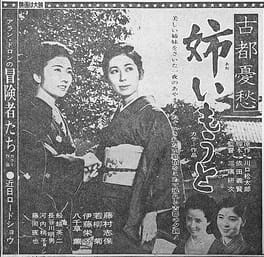
Photo: 中日新聞社 / Public domain (source: Wikimedia Commons)
My Take
I'll be honest, Shiho Fujimura is the kind of presence that makes a room go quiet without trying. She came up in the Daiei studio system and built her name in period pieces and those moody literary adaptations, and what gets me is how little she had to do to land an emotional gut-punch. A lowered glance, a held breath, that composed stillness, and somehow you'd read a whole inner monologue off her face. I always assumed she was some Kyoto blueblood, so learning she's a Kawasaki girl reframed the whole elegant act for me, in a good way. And she didn't flame out, either: an Elan d'Or newcomer nod early, then decades on screen, then the Tanaka Kinuyo honor much later. That quiet, spine-straight kind of actress feels rare now, and I genuinely miss it.
This take was written by generative AI, one per person, from publicly reported facts (editorial policy). It is a reading of the record, not reporting.
Overview
Shiho Fujimura was a Japanese actress born on January 3, 1939, in Kawasaki, Kanagawa Prefecture. She rose to prominence through period dramas and literary films, most notably at Daiei, and was recognized early in her career with the Elan d'Or Award for Best Newcomer in 1964. Her sustained excellence over decades was further acknowledged with the Tanaka Kinuyo Award in 1999.
1. Profile
- Name (English)
- Shiho Fujimura
- Name (Japanese)
- 藤村志保
- Reading
- ふじむら しほ
- Born
- January 3, 1939 – June 12, 2025
- Origin
- Kawasaki, Kanagawa, Japan
- Occupation
- Actress
- Zodiac / Chinese zodiac
- Capricorn / Rabbit
2. Background
Awards & achievements
- 1964 — Elan d'Or Award, Best Newcomer
- 1999 — Tanaka Kinuyo Award
3. Works & records
Works summary
- Appearances
- 156 (1962–2014)
- By year (titles with a known year)
- 1962: 7, 1963: 7, 1964: 7, 1965: 13, 1966: 10, 1967: 9, 1968: 2, 1969: 5, 1970: 3, 1971: 1, 1972: 1, 1973: 3, 1974: 1, 1975: 3, 1976: 3, 1977: 2, 1978: 5, 1979: 2, 1981: 1, 1982: 3, 1983: 1, 1985: 1, 1986: 2, 1987: 1, 1988: 1, 1990: 1, 1991: 1, 1993: 3, 1995: 3, 1996: 1, 1997: 1, 1998: 1, 1999: 2, 2000: 2, 2001: 2, 2002: 4, 2003: 3, 2004: 5, 2005: 1, 2006: 1, 2007: 3, 2008: 3, 2010: 1, 2011: 6, 2012: 3, 2013: 2, 2014: 4, year unknown: 9
- Debut work
- 婦系図
Filmography / notable works
| Category | Title | Year |
|---|---|---|
| Film | 悪夢ちゃん The 夢ovie | 2014 |
| Film | 救いたい | 2014 |
| TV drama | Gunshi Kanbei | 2014 |
| TV drama | Ashio kara Kita On'na | 2014 |
| TV drama | 恐竜せんせい | 2013 |
| CM | NTTドコモ - ドコモ田家編 | 2013 |
| Film | Casting Blossoms to the Sky | 2012 |
| TV drama | My Little Nightmare | 2012 |
| TV drama | 女三代 如月法律事務所 | 2012 |
| TV drama | フェイク 京都美術事件絵巻 | 2011 |
| TV drama | マドンナ・ヴェルデ〜娘のために産むこと〜 | 2011 |
| TV drama | ハンチョウ〜神南署安積班〜 | 2011 |
| TV drama | 浅見光彦シリーズ30 | 2011 |
| TV drama | 初秋 | 2011 |
| TV drama | 蝶々さん | 2011 |
| Film | 花のあと | 2010 |
| Film | 陰獣 | 2008 |
| Film | 砂時計 | 2008 |
| TV drama | Dandan | 2008 |
| Film | Town of Evening Calm, Country of Cherry Blossoms | 2007 |
| Film | 小津の秋 | 2007 |
| TV drama | 風林火山 | 2007 |
| TV drama | 慈父の剣 | 2006 |
| TV drama | 不機嫌なジーン | 2005 |
| Film | 嗤う伊右衛門 | 2004 |
| Film | カーテンコール | 2004 |
| Film | 二人日和 | 2004 |
| TV drama | 向田邦子の恋文 | 2004 |
| TV drama | ねばる女 | 2004 |
| Film | 花 | 2003 |
| TV drama | Teruteru Kazoku | 2003 |
| TV drama | さすらい署長 風間昭平 みちのく北上川殺人事件1 | 2003 |
| Film | 白い犬とワルツを | 2002 |
| TV drama | 母の夢 | 2002 |
| TV drama | ホーム&アウェイ | 2002 |
| TV drama | 松本清張没後10年特別企画・家紋 | 2002 |
| Film | 狗神 | 2001 |
| Film | Merdeka 17805 | 2001 |
| Film | 長崎ぶらぶら節 | 2000 |
| TV drama | 柳橋慕情 | 2000 |
| Film | 双生児 | 1999 |
| TV drama | 温泉へ行こう1〜5 | 1999 |
| Film | Wait and See | 1998 |
| Film | 東京日和 | 1997 |
| TV drama | ひまわり | 1996 |
| TV drama | Hachidai Shōgun Yoshimune | 1995 |
| TV drama | きのうの敵は今日も敵 | 1995 |
| TV drama | 浅見光彦シリーズ・伊香保殺人事件 | 1995 |
| Film | Lone Wolf and Cub: Final Conflict | 1993 |
| Film | Bloom in the Moonlight | 1993 |
| TV drama | 親子は他人の始まり | 1993 |
| TV drama | 太平記 | 1991 |
| TV drama | 家族物語 | 1990 |
| TV drama | 飢餓海峡 | 1988 |
| Film | ラッコ物語 | 1987 |
| TV drama | 帰ってきた娘 | 1986 |
| TV drama | 武蔵坊弁慶 | 1986 |
| TV drama | 花へんろ | 1985 |
| TV drama | 家族の選択 | 1983 |
| Film | 遠野物語 | 1982 |
4. Links
- Wikipedia (Japanese)https://ja.wikipedia.org/wiki/%E8%97%A4%E6%9D%91%E5%BF%97%E4%BF%9D
- Wikidatahttps://www.wikidata.org/wiki/Q3543910
5. About this entry
Tags
- Last updated
Only publicly available facts are listed; non-public or unconfirmed items are omitted. Base data was compiled from Wikidata from June 2026 onward; ages are recalculated daily and deaths are checked against Wikidata on an ongoing basis. Works and profile fields sourced from Wikipedia reflect content as of 2026-08-26. English text is machine-assisted (facts translated by Sonnet, "My Take" written by Opus 4.8). The Japanese page is the source of record.
Frequently asked questions
When was Shiho Fujimura born?
Shiho Fujimura was born on January 3, 1939.
When did Shiho Fujimura die?
Shiho Fujimura died on June 12, 2025, aged 86.
Where was Shiho Fujimura from?
Shiho Fujimura was from Kawasaki, Kanagawa, Japan.
What did Shiho Fujimura do?
Shiho Fujimura worked as Actress.
Actress — see all → · More people from Japan → · More people born on January 3 →