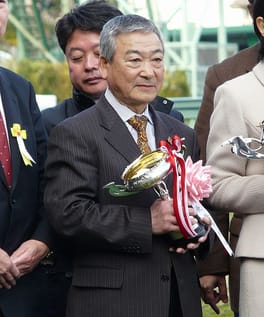
Photo: Cake6 (talk) / CC BY-SA 3.0 (source: Wikimedia Commons)
My Take
I don't know the full stats, but that's kind of the point: jockeys from that era didn't have sports science or precise nutrition plans, just grit, instinct, and an almost telepathic bond with a thousand-pound animal. The weight management alone is brutal enough to break most people quietly and without fanfare. There's something deeply craftsman-like about a rider who came up through the 1970s Japanese racing world — no frills, no personal brand, just the work. I find myself respecting that kind of career even when the details are sparse, maybe especially then.
This take was written by generative AI, one per person, from publicly reported facts (editorial policy). It is a reading of the record, not reporting.
Overview
Shinobu Hoshino is a Japanese jockey born on December 29, 1950, in Tokyo, Japan. A Capricorn born in the Year of the Tiger, Hoshino pursued a career in professional horse racing. Detailed records of race achievements and career statistics are not publicly available.
1. Profile
- Name (English)
- Shinobu Hoshino
- Name (Japanese)
- 星野忍
- Reading
- ほしの しのぶ
- Born
- December 29, 1950 (age 75)
- Origin
- Tokyo, Japan
- Occupation
- Jockey
- Zodiac / Chinese zodiac
- Capricorn / Tiger
2. Links
- Wikipedia (Japanese)https://ja.wikipedia.org/wiki/%E6%98%9F%E9%87%8E%E5%BF%8D
- Wikidatahttps://www.wikidata.org/wiki/Q11513126
3. About this entry
Tags
- Last updated
Facts are limited to publicly available information up to 2024; non-public or unconfirmed items are omitted. English text is machine-assisted (facts translated by Sonnet, "My Take" written by Opus 4.8). The Japanese page is the source of record.
Frequently asked questions
When was Shinobu Hoshino born?
Born December 29, 1950 (age 75).
Where is Shinobu Hoshino from?
Shinobu Hoshino is from Tokyo, Japan.
What does Shinobu Hoshino do?
Shinobu Hoshino works as Jockey.