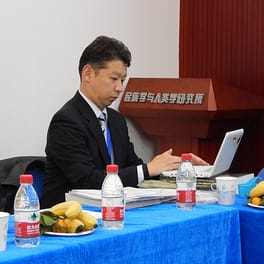
Photo: BabelStone / CC BY-SA 3.0 (source: Wikimedia Commons)
My Take
Shintaro Arakawa is a linguist and university professor born in 1971, and honestly the moment you hear "Kyoto University" you already know you're dealing with someone who spent years grinding through one of Japan's most brutal academic filters. Linguistics doesn't get a lot of flashy coverage, which I think is a shame — this is the field that asks why language works the way it does, and that question quietly underpins everything from how we argue to how we think. No viral moments, no tabloid drama, just the steady accumulation of knowledge that eventually shapes how the next generation of researchers sees words and meaning. That kind of patient, foundational work doesn't trend, but it lasts.
This take was written by generative AI, one per person, from publicly reported facts (editorial policy). It is a reading of the record, not reporting.
Overview
Shintarō Arakawa is a Japanese linguist and university educator born on May 1, 1971. He is a graduate of Kyoto University. He works in the field of linguistics and has been involved in academic teaching. Details such as his active period, agency affiliation, and personal background remain private or unknown.
1. Profile
- Name (English)
- Shintarō Arakawa
- Name (Japanese)
- 荒川慎太郎
- Reading
- あらかわ しんたろう
- Born
- May 1, 1971 (age 55)
- Origin
- Japan
- Occupation
- Linguist / University Lecturer
- Zodiac / Chinese zodiac
- Taurus / Boar
2. Background
- University
- Kyoto University
3. Links
4. About this entry
Tags
- Last updated
Facts are limited to publicly available information up to 2024; non-public or unconfirmed items are omitted. English text is machine-assisted (facts translated by Sonnet, "My Take" written by Opus 4.8). The Japanese page is the source of record.
Frequently asked questions
When was Shintarō Arakawa born?
Born May 1, 1971 (age 55).
Where is Shintarō Arakawa from?
Shintarō Arakawa is from Japan.
What does Shintarō Arakawa do?
Shintarō Arakawa works as Linguist, University Lecturer.