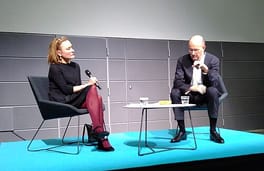
Photo: Kaihsu Tai / CC BY-SA 4.0 (source: Wikimedia Commons)
Thomas Larcher is a composer, musicologist and pianist, born on September 16, 1963 in Innsbruck, Austria. Thomas Larcher is 63 years old as of 2026. Education on record includes University of Music and Performing Arts Vienna. Awards on record include Art Prize of Innsbruck and Stoeger Prize (2014). Notable works include Still, Madhares and Cold Farmer.
My Take
Thomas Larcher's music carries a chill that I find oddly comforting. Born in Innsbruck and trained in Vienna as a pianist, he writes contemporary works like Still and Madhares that pair glacial stillness with sudden ferocity, as if the Alps themselves had been scored. Modern composition often intimidates listeners, but Larcher's pieces hide real warmth beneath their austere surfaces, and that tension is exactly what hooks me. With the Art Prize of Innsbruck and the Stoeger Prize to his name, he has earned respect as both performer and creator. He is the sort of composer you return to, hearing more in the silences each time.
This take was written by generative AI, one per person, from publicly reported facts (editorial policy). It is a reading of the record, not reporting.
1. Profile
- Name (English)
- Thomas Larcher
- Name (Japanese)
- トーマス・ラルヒャー
- Reading
- とーます・らるひゃー
- Born
- September 16, 1963 (age 63)
- Origin
- Innsbruck, Austria
- Occupation
- composer / musicologist / pianist / musician
- Zodiac / Chinese zodiac
- Virgo / Rabbit
2. Background
- University
- University of Music and Performing Arts Vienna
Awards & achievements
- Art Prize of Innsbruck
- 2014 Stoeger Prize
3. Works & records
Filmography / notable works
| Category | Title |
|---|---|
| Notable work | Still |
| Notable work | Madhares |
| Notable work | Cold Farmer |
4. Links
- Official sitehttps://www.thomaslarcher.com/
- Wikipedia (English)https://en.wikipedia.org/wiki/Thomas%20Larcher
- Wikipedia (Japanese)https://ja.wikipedia.org/wiki/%E3%83%88%E3%83%BC%E3%83%9E%E3%82%B9%E3%83%BB%E3%83%A9%E3%83%AB%E3%83%92%E3%83%A3%E3%83%BC
- Wikidatahttps://www.wikidata.org/wiki/Q85655
5. About this entry
Tags
- Last updated
Facts are limited to publicly available information up to 2024; non-public or unconfirmed items are omitted. English text is machine-assisted (facts translated by Sonnet, "My Take" written by Opus 4.8). The Japanese page is the source of record.
Frequently asked questions
When was Thomas Larcher born?
Born September 16, 1963 (age 63).
Where is Thomas Larcher from?
Thomas Larcher is from Innsbruck, Austria.
What does Thomas Larcher do?
Thomas Larcher works as composer, musicologist, pianist, musician.
What is Thomas Larcher known for?
Notable works include Still, Madhares, Cold Farmer.
Composer — see all → · Musicologist — see all → · More people from Austria →