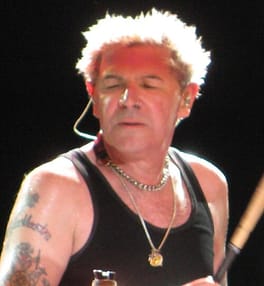
Photo: ceedub13 / CC BY 2.0 (source: Wikimedia Commons)
Thommy Price was born in Brooklyn, New York, United States on December 9, 1956. Thommy Price was credited as a musician and drummer.
My Take
Drummers are the unsung architects of rock, and Thommy Price is a perfect case study. Out of Brooklyn, he kept the beat for Scandal, Blue Öyster Cult, Billy Idol's band, and, most tellingly, became the longest-serving member of Joan Jett and the Blackhearts besides Jett herself. That detail says everything: a man behind the kit, not the microphone, trusted to stay at the heart of a band for decades. He died in 2025, but his real legacy is structural, the dependable pulse under songs everyone knows. I have enormous respect for that kind of steadiness. Rhythm, after all, never lies.
This take was written by generative AI, one per person, from publicly reported facts (editorial policy). It is a reading of the record, not reporting.
1. Profile
- Name (English)
- Thommy Price
- Name (Japanese)
- トミー・プライス
- Reading
- とみー・ぷらいす
- Born
- December 9, 1956
- Origin
- Brooklyn, New York, United States
- Occupation
- musician / drummer
- Zodiac / Chinese zodiac
- Sagittarius / Monkey
2. Links
- Official sitehttps://www.thommyprice.com
- Wikipedia (English)https://en.wikipedia.org/wiki/Thommy%20Price
- Wikipedia (Japanese)https://ja.wikipedia.org/wiki/%E3%83%88%E3%83%9F%E3%83%BC%E3%83%BB%E3%83%97%E3%83%A9%E3%82%A4%E3%82%B9
- Wikidatahttps://www.wikidata.org/wiki/Q5961481
3. About this entry
Tags
- Last updated
Facts are limited to publicly available information up to 2024; non-public or unconfirmed items are omitted. English text is machine-assisted (facts translated by Sonnet, "My Take" written by Opus 4.8). The Japanese page is the source of record.
Frequently asked questions
When was Thommy Price born?
Born December 9, 1956.
Where was Thommy Price from?
Thommy Price was from Brooklyn, New York, United States.
What did Thommy Price do?
Thommy Price worked as musician, drummer.
Musician — see all → · Drummer — see all → · More people from the United States →