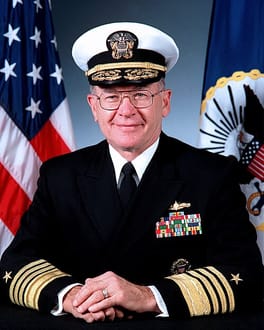
Photo: United States Navy / Public domain (source: Wikimedia Commons)
Vern Clark was born on September 7, 1944 in Sioux City, Iowa, United States and is credited as a military officer. Vern Clark is 82 years old as of 2026. Schooling on record includes Evangel University. Recorded honors include Defense Distinguished Service Medal, Navy Distinguished Service Medal and Legionnaire of Legion of Merit.
My Take
Vern Clark interests me as a study in steadiness over spectacle. Serving five years as Chief of Naval Operations, the second-longest tenure in that role, tells me he commanded not just authority but durable trust, which is harder to earn. A small-town Iowa kid rising to run the entire U.S. Navy is a quintessentially American arc, and his stack of distinguished service medals reads like a record of reliability rather than flash. That corporate boards still sought him afterward says his judgment outlasted his uniform. I have a soft spot for leaders who move enormous things without needing to be seen doing it, and he reads that way to me.
This take was written by generative AI, one per person, from publicly reported facts (editorial policy). It is a reading of the record, not reporting.
1. Profile
- Name (English)
- Vern Clark
- Name (Japanese)
- ヴァーン・クラーク
- Reading
- ゔぁーん・くらーく
- Born
- September 7, 1944 (age 82)
- Origin
- Sioux City, Iowa, United States
- Occupation
- military officer
- Zodiac / Chinese zodiac
- Virgo / Monkey
2. Background
- University
- Evangel University
Awards & achievements
- Defense Distinguished Service Medal
- Navy Distinguished Service Medal
- Legionnaire of Legion of Merit
3. Links
4. About this entry
Tags
- Last updated
Facts are limited to publicly available information up to 2024; non-public or unconfirmed items are omitted. English text is machine-assisted (facts translated by Sonnet, "My Take" written by Opus 4.8). The Japanese page is the source of record.
Frequently asked questions
When was Vern Clark born?
Born September 7, 1944 (age 82).
Where is Vern Clark from?
Vern Clark is from Sioux City, Iowa, United States.
What does Vern Clark do?
Vern Clark works as military officer.
Military officer — see all → · More people from the United States →