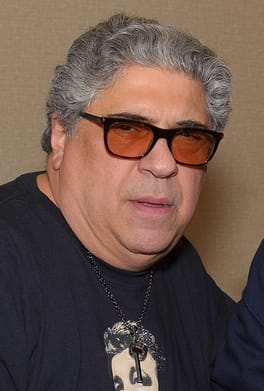
Photo: Rob DiCaterino from Clifton, NJ, USA / CC BY 2.0 (source: Wikimedia Commons)
Public records list Vincent Pastore as an actor and radio personality. Born on July 14, 1946, Vincent Pastore was from New York City, New York, United States. Education on record includes Pace University.
My Take
Vincent Pastore proves that a single great role can be a whole legacy. His Big Pussy Bonpensiero on The Sopranos is one of television's most quietly devastating performances, a betrayal story told mostly through tired eyes and forced laughter. What I love is that Pastore came to acting relatively late, after a full life in the real world, and you can feel that authenticity in every wiseguy he plays. Even voicing a cartoon fish in Shark Tale, he brings genuine neighborhood warmth. Typecasting never diminished him; he turned the mobster archetype into something human. For my money, he is the soul of an entire genre of New York storytelling.
This take was written by generative AI, one per person, from publicly reported facts (editorial policy). It is a reading of the record, not reporting.
1. Profile
- Name (English)
- Vincent Pastore
- Name (Japanese)
- ヴィンセント・パストーレ
- Reading
- ゔぃんせんと・ぱすとーれ
- Born
- July 14, 1946
- Origin
- New York City, New York, United States
- Occupation
- actor / radio personality
- Zodiac / Chinese zodiac
- Cancer / Dog
2. Background
- University
- Pace University
3. Links
- Official sitehttps://www.vincentpastore.com
- Wikipedia (English)https://en.wikipedia.org/wiki/Vincent%20Pastore
- Wikidatahttps://www.wikidata.org/wiki/Q512986
4. About this entry
Tags
- Last updated
Facts are limited to publicly available information up to 2024; non-public or unconfirmed items are omitted. English text is machine-assisted (facts translated by Sonnet, "My Take" written by Opus 4.8). The Japanese page is the source of record.
Frequently asked questions
When was Vincent Pastore born?
Born July 14, 1946.
Where was Vincent Pastore from?
Vincent Pastore was from New York City, New York, United States.
What did Vincent Pastore do?
Vincent Pastore worked as actor, radio personality.
Actor — see all → · Radio personality — see all → · More people from the United States →