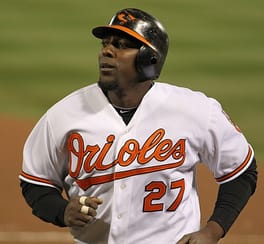
Photo: Keith Allison on Flickr / CC BY-SA 2.0 (source: Wikimedia Commons)
Vladimir Guerrero is a baseball player. Vladimir Guerrero was born in Don Gregorio, Peravia Province, Dominican Republic on February 9, 1975. The age as of 2026 is 51. Awards on record include Canadian Baseball Hall of Fame, Major League Baseball Most Valuable Player Award (2004), Major League Baseball All-Star and 2 more.
My Take
Vladimir Guerrero remains my favorite argument against baseball orthodoxy. Hitters are taught discipline; Vlad swung at everything, pitches in the dirt, pitches at his eyes, and still hit them hard for sixteen big-league seasons, winning the 2004 MVP and a shelf of Silver Sluggers. No batting gloves, a pine-tar-stained helmet, a cannon arm in right field: he played like the game was still a sandlot in Don Gregorio, and that joy was contagious. Analytics can explain almost everything in modern baseball, but it never fully explained him. The Canadian Baseball Hall of Fame nod for his Expos years feels right; Montreal saw the wild genius first.
This take was written by generative AI, one per person, from publicly reported facts (editorial policy). It is a reading of the record, not reporting.
1. Profile
- Name (English)
- Vladimir Guerrero
- Name (Japanese)
- ブラディミール・ゲレーロ
- Reading
- ぶらでぃみーる・げれーろ
- Born
- February 9, 1975 (age 51)
- Origin
- Don Gregorio, Peravia Province, Dominican Republic
- Occupation
- baseball player
- Zodiac / Chinese zodiac
- Aquarius / Rabbit
2. Background
Awards & achievements
- Canadian Baseball Hall of Fame
- 2004 Major League Baseball Most Valuable Player Award
- Major League Baseball All-Star
- Silver Slugger Award
- Montreal Expos Player of the Year
3. Links
- Instagramhttps://www.instagram.com/supervlad27/
- Xhttps://x.com/VladGuerrero27
- Wikipedia (English)https://en.wikipedia.org/wiki/Vladimir%20Guerrero
- Wikipedia (Japanese)https://ja.wikipedia.org/wiki/%E3%83%96%E3%83%A9%E3%83%87%E3%82%A3%E3%83%9F%E3%83%BC%E3%83%AB%E3%83%BB%E3%82%B2%E3%83%AC%E3%83%BC%E3%83%AD
- Wikidatahttps://www.wikidata.org/wiki/Q1185254
4. About this entry
Tags
- Last updated
Facts are limited to publicly available information up to 2024; non-public or unconfirmed items are omitted. English text is machine-assisted (facts translated by Sonnet, "My Take" written by Opus 4.8). The Japanese page is the source of record.
Frequently asked questions
When was Vladimir Guerrero born?
Born February 9, 1975 (age 51).
Where is Vladimir Guerrero from?
Vladimir Guerrero is from Don Gregorio, Peravia Province, Dominican Republic.
What does Vladimir Guerrero do?
Vladimir Guerrero works as baseball player.
Baseball player — see all → · More people from the Dominican Republic →