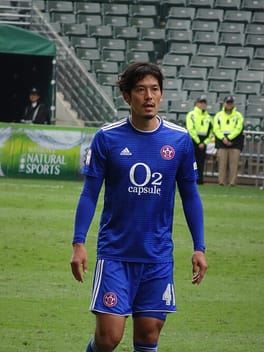
Photo: Dltl2010 / CC BY-SA 4.0 (source: Wikimedia Commons)
My Take
Yusuke Igawa is exactly the kind of player I have a soft spot for — not the flashy name on the highlight reel, but the guy who quietly put in 259 J1 League appearances as a center back and earned every one of them. Growing up in Osaka, coming through the Gamba academy, then bouncing through Hiroshima, Nagoya, and eventually making Kawasaki Frontale his real home — that's a career built on grinding, not glamour. He was called up to the Japan national squad in 2008 under Okada, which tells you the level was there, even if the caps never came. The fact that he chased the game all the way to Hong Kong in his mid-30s rather than quietly fading out says something about his character. And now he's coaching in the Hong Kong lower divisions, which honestly feels like the most Igawa move possible — no fanfare, just passing it on.
This take was written by generative AI, one per person, from publicly reported facts (editorial policy). It is a reading of the record, not reporting.
Overview
Yusuke Igawa is a Japanese former professional footballer and coach born on October 30, 1982, in Osaka City, Osaka Prefecture. Standing 182 cm tall, he played in a defensive role and went on to pursue a career in coaching after retiring from active play. He attended Kansai University before entering the professional football world.
1. Profile
- Name (English)
- Yusuke Igawa
- Name (Japanese)
- 井川祐輔
- Reading
- いがわ ゆうすけ
- Born
- October 30, 1982 (age 43)
- Origin
- Osaka City, Osaka Prefecture, Japan
- Height
- 182cm
- Occupation
- footballer / football coach
- Zodiac / Chinese zodiac
- Scorpio / Dog
2. Background
- University
- Kansai University
3. Links
4. About this entry
Tags
- Last updated
Facts are limited to publicly available information up to 2024; non-public or unconfirmed items are omitted. English text is machine-assisted (facts translated by Sonnet, "My Take" written by Opus 4.8). The Japanese page is the source of record.
Frequently asked questions
When was Yusuke Igawa born?
Born October 30, 1982 (age 43).
Where is Yusuke Igawa from?
Yusuke Igawa is from Osaka City, Osaka Prefecture, Japan.
What does Yusuke Igawa do?
Yusuke Igawa works as footballer, football coach.
How tall is Yusuke Igawa?
Yusuke Igawa is 182 cm.